
Comparative Philology and Primordial Etymology
Tracing Global Linguistic Variations to Sanskrit Roots
- Epistemological Foundations of Speech and the Critique of Naturalistic-Evolutionary Theories
1.1 Narrative Context & Strategic Importance
The inquiry into the genesis of human language forms the foundational bedrock of both cognitive philosophy and comparative philology. Modern naturalistic and evolutionary hypotheses postulate that human speech arose through gradual, uninstructed biological development; evolving spontaneously from primitive gestures, emotive exclamations, or environmental sound imitations. However, a rigorous critique of these hypotheses reveals severe logical, epistemological, and empirical contradictions. Deconstructing naturalistic origin theories is not merely a historical or academic exercise; it is a strategic prerequisite for establishing a coherent philological framework grounded in authentic textual evidence and cognitive reality.
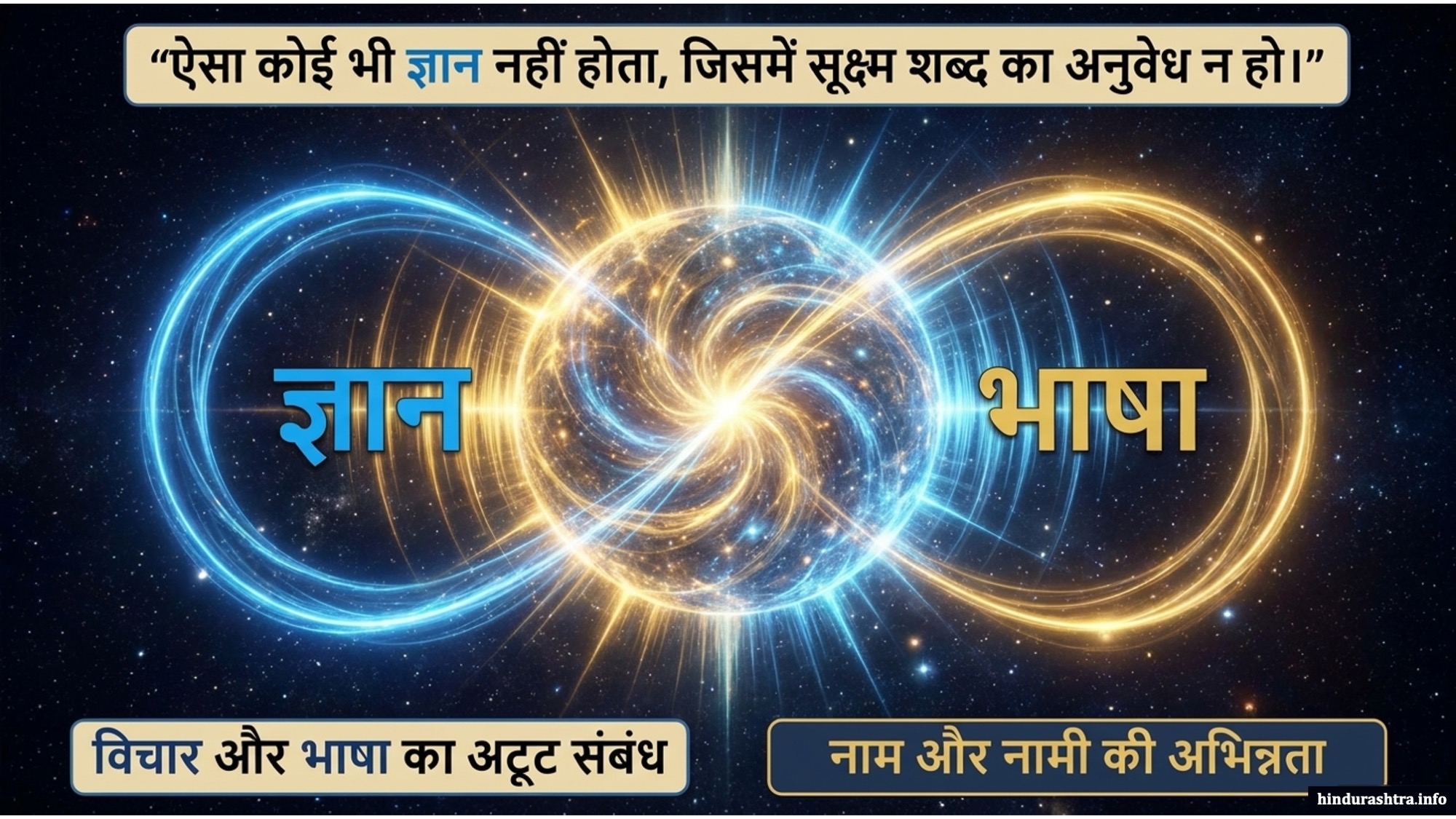
Cognitive awareness (Jñāna [ज्ञान]) cannot exist in an intellectual vacuum devoid of subtle linguistic structure (Sūkṣma Śabda [सूक्ष्म शब्द]). Human thought and speech are intrinsically bound, requiring prior instruction (Śikṣā [शिक्षा]) and a structured matrix of articulated sounds. By critically evaluating evolutionary assertions against empirical speech pathology, historical language isolation experiments, and classical Vedantic linguistic theology, philology demonstrates that human language could not have developed independently from raw environmental stimuli. Instead, articulate human speech presupposes an antecedent, highly organized phonetic framework imparted through divine revelation at the dawn of consciousness.
1.2 Critique of Onomatopoeic (Anukaraṇa [अनुकरण]) and Expressive Exclamation Hypotheses
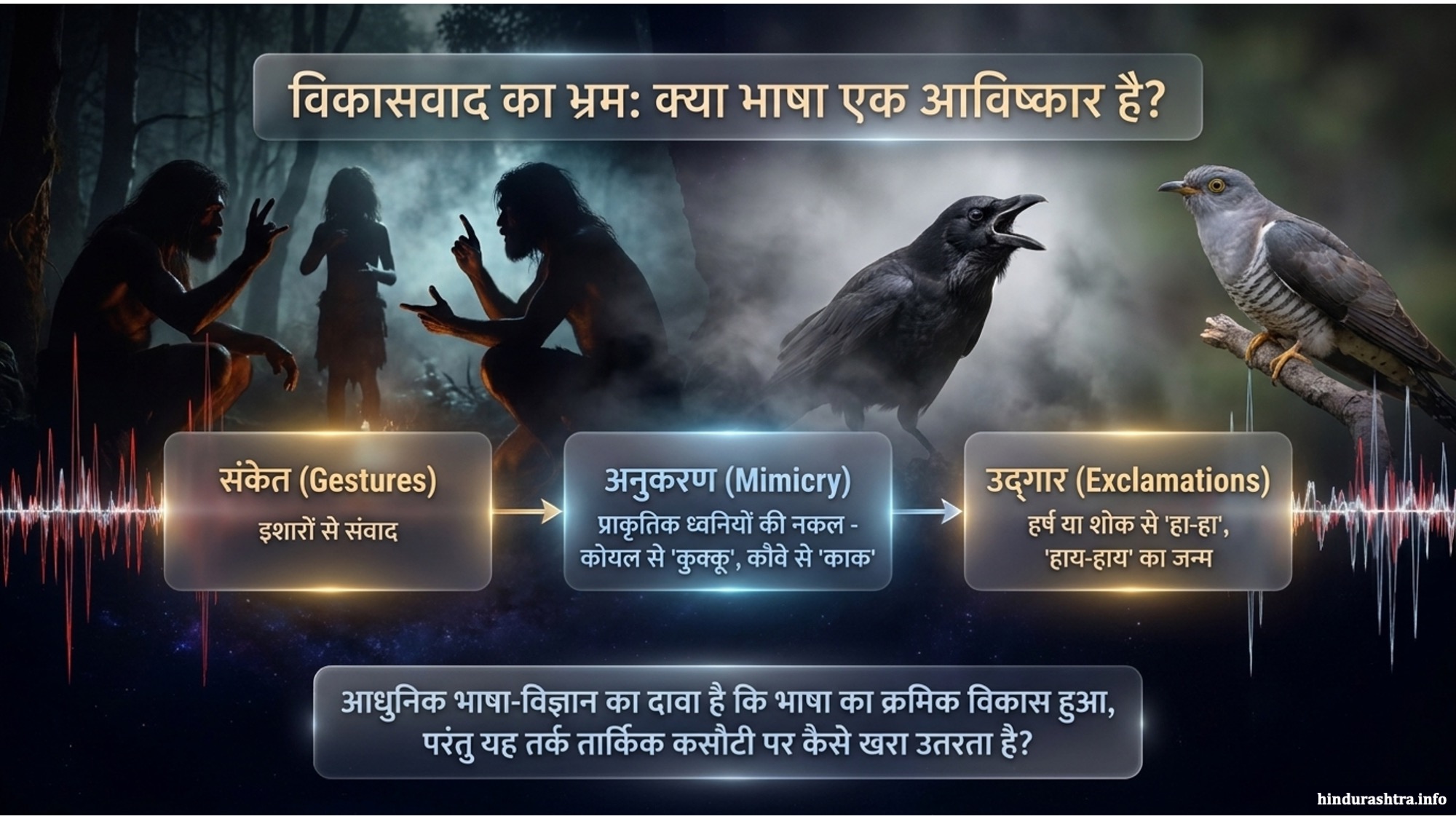
Evolutionary linguistics frequently asserts that primitive speech originated via Anukaraṇa [अनुकरण], the spontaneous imitation of ambient, natural sounds (popularly termed the “Bow-Wow” theory); or through innate emotional exclamations of joy, sorrow, or surprise (the “Pooh-Pooh” theory). Proponents argue, for instance, that hearing a cuckoo’s call led directly to the English word cuckoo, or that a crow’s call inspired the Sanskrit term Kāka [काक]. Similarly, spontaneous vocalizations like “hā-hā” or “hāy-hāy” are cited as primitive precursors to formal verbal roots.
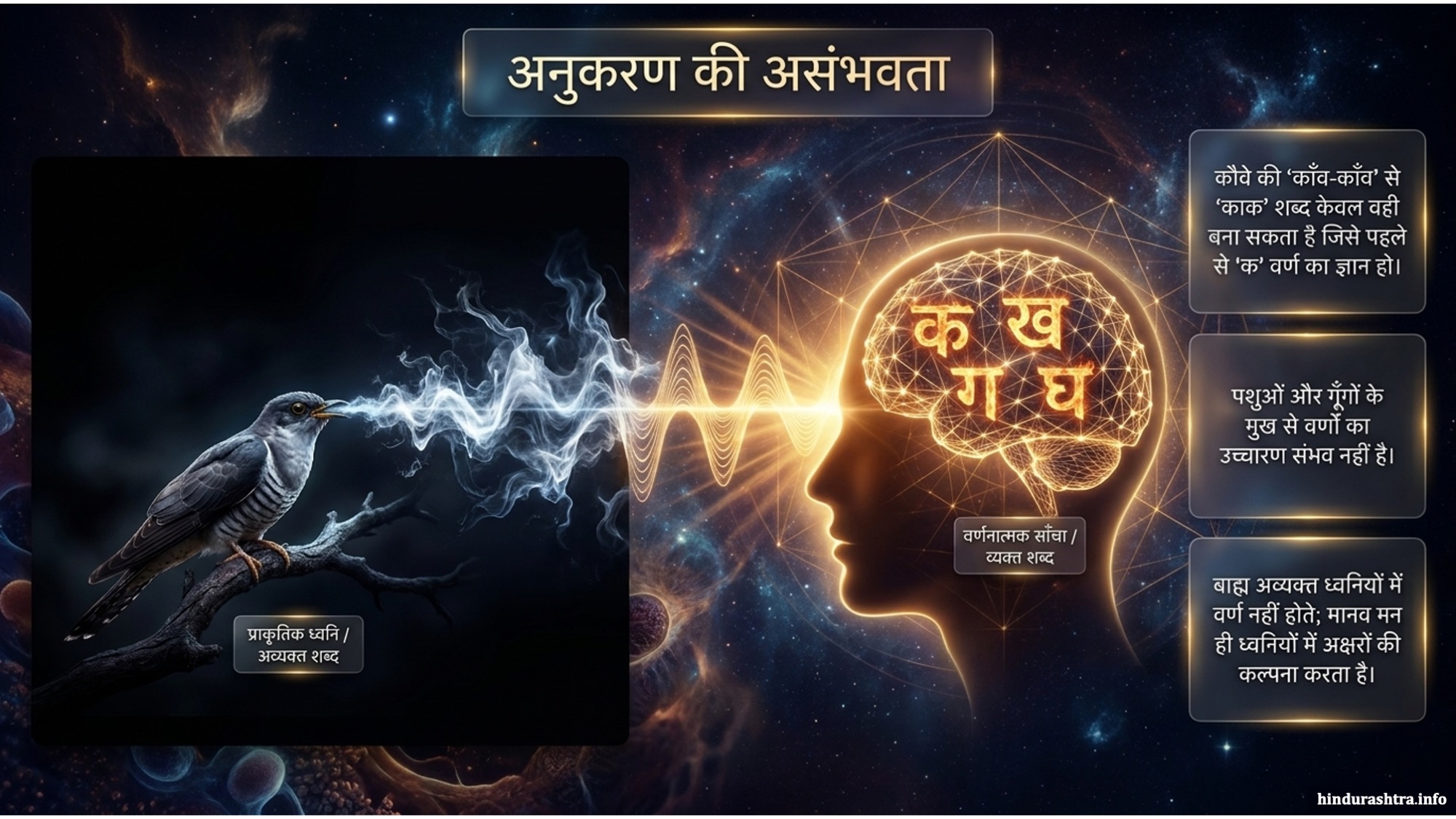
This hypothesis collapses upon phonetic and epistemological analysis. Environmental sounds, such as the rustling of leaves, the impact of a stick (gaḍḍ), a rat gnawing (kaṭṭ), a snake sliding (sarr), a goat bleating (meṁ-meṁ), or the ringing of a bell (ṭan-ṭan, dham-dham, khaṭ-khaṭ, pūṁ-pūṁ, jhan-jhan); are entirely unarticulated noise (Avyakta Śabda [अव्यक्त शब्द]). They do not possess intrinsic consonantal or vocalic structures (Varṇas [वर्ण]).
An unarticulated sound cannot independently generate articulated letters (Vyakta Śabda [व्यक्त शब्द]). A listener can only perceive or map articulated letters (such as the consonant series kakārādi Śabda [ककारादि शब्द]: k, kh, g, gh) onto natural sounds if that listener already possesses pre-existing phonetic knowledge and the mental infrastructure required to produce articulate speech. Expressive vocalizations require precise physiological apparatuses and active cognitive mapping across specific articulation points (Kaṇṭhaṭādi-sthāna [कण्ठ्यादि स्थान]; including the throat, palate, roof of the mouth, teeth, lips, and tongue). Without prior phonetic instruction, a human infant or feral individual cannot articulate structured letters, making the spontaneous leap from raw environmental noise to structured language physically and logically impossible.
|
Evolutionary Claim / Supposed Sound Origin |
Textual / Philological Refutation |
|
Cuckoo / Crow Calls (Anukaraṇa [अनुकरण]):Words like cuckoo or Kāka arose directly from imitating bird sounds. |
Natural sounds are unarticulated (Avyakta [अव्यक्त]). Mapping them into articulated letters (Vyakta [व्यक्त]) like k or ā requires prior knowledge of the alphabet matrix (Varṇamālā [वर्णमाला]). |
|
Inanimate Impacts & Animal Noises: Words derived from natural sounds like kaṭṭ (rat), sarr(snake), gaḍḍ (stick impact), meṁ-meṁ (goat), or ṭan-ṭan (bell). |
Outside human speech organ mechanics, nature produces no articulated consonants. The human speaker projects pre-learned phonetic letters onto raw physical noises. |
|
Spontaneous Exclamations: Words like hā-hā, hāy-hāy, or vāh-vāh naturally erupted from emotional states to form speech roots. |
Articulating exclamations containing distinct consonants requires active control over vocal points (Kaṇṭhaṭādi-sthāna [कण्ठ्यादि स्थान]). Uninstructed humans and animals cannot produce these sounds spontaneously. |
|
Rooster Calls: The vocalization kukurḍū-kū(Hindi) or cock-a-doodle-doo (English) reflects the bird’s actual acoustic output. |
The vast disparity between English and Hindi renderings proves that environmental noise lacks intrinsic letters; human listeners superimpose culturally pre-learned phonetic molds onto unarticulated noise. |
1.3 Deconstruction of Gestural Primacy and Social Contract Theories
Rationalist and political philosophers, including John Locke, Adam Smith, and Dugald Stewart, posited that human beings existed in a primitive, mute state for extended epochs. They hypothesized that early humans communicated exclusively through physical gestures, facial expressions, and brow movements (bhrūkṣepa [भ्रूक्षेप]), eventually convening to establish a “social contract” or mutual convention (Saṅketa [संकेत]) that assigned specific acoustic sounds to distinct objects and concepts.
This theory presents a fundamental philosophical paradox: the necessity of pre-existing language to create language. The eminent philologist Max Müller systematically dismantled this social contract hypothesis by highlighting the impossibility of uninstructed consensus.
“I cannot understand how communication could continue among them without language. Was communication maintained uselessly before meanings were fixed? Until they possessed meaningful sounds, how was it possible to establish that ‘such-and-such a word shall denote such-and-such an object’? How could one person tell another that ‘bread should be called and understood as choo-choo’, and how could others comprehend these instructions? Thus, knowledge cannot be formed without language, nor can language be formed without knowledge.”
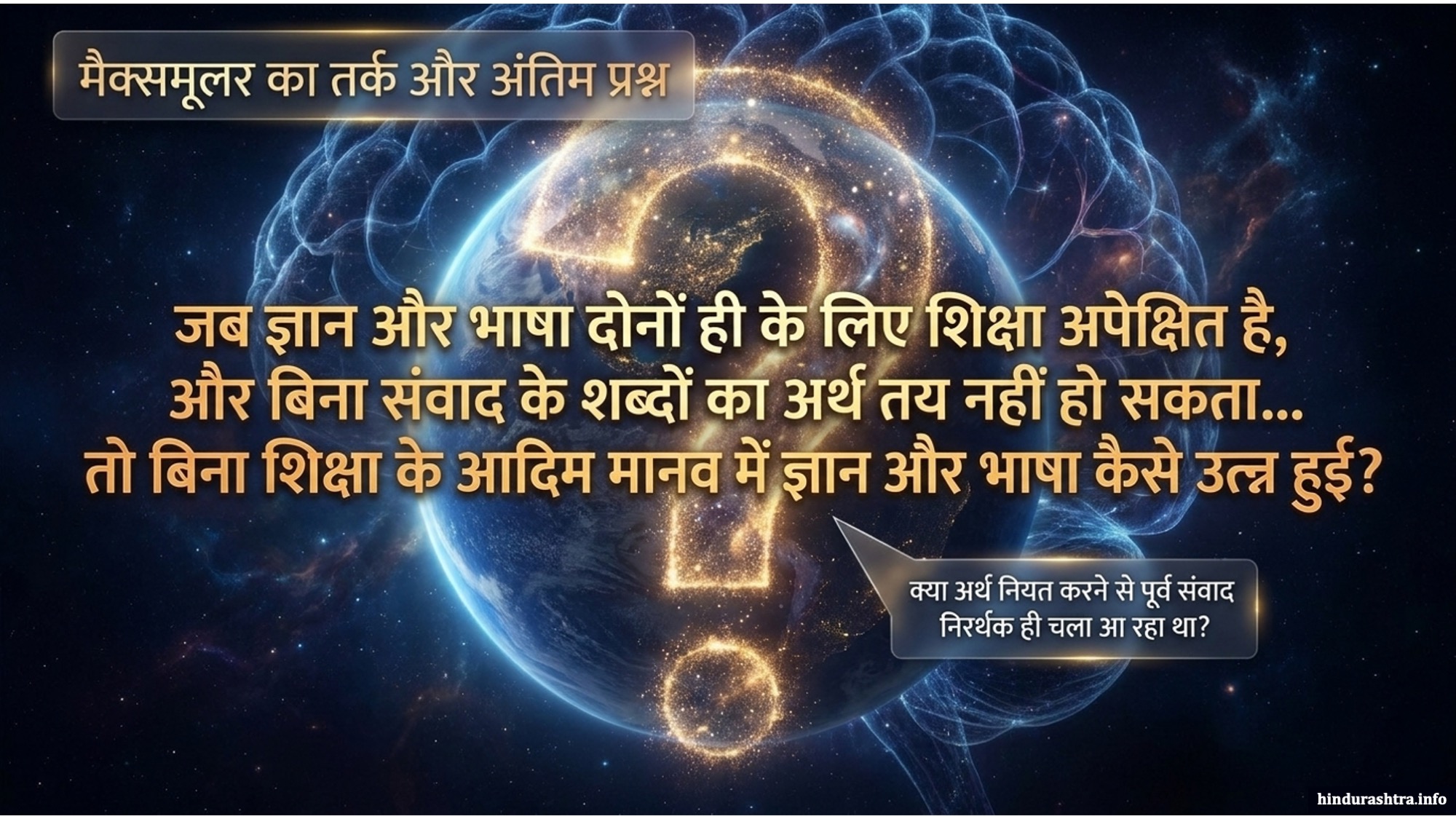
The assumption that gestural communication preceded speech as a primitive, pre-linguistic substitute fundamentally misunderstands cognitive architecture. Gestural systems, whether theatrical expression, naval flag signalling, or telegraphic codes (trā-ṭakkū) do not represent primitive ignorance. On the contrary, gestural communication is a highly intellectualized, abstract form of secondary representation that requires sophisticated mental processing and rigorous prior instruction. Uninstructed, feral individuals are entirely incapable of negotiating abstract conventions. If early humans lacked meaningful vocal symbols, they could not possess the cognitive framework required to organize a convention, deliberate on semantic associations, or agree that an arbitrary vocalization like “choo-choo” should represent bread.
1.4 Empirical Evidence from Language Deprivation Experiments and Speech Pathology
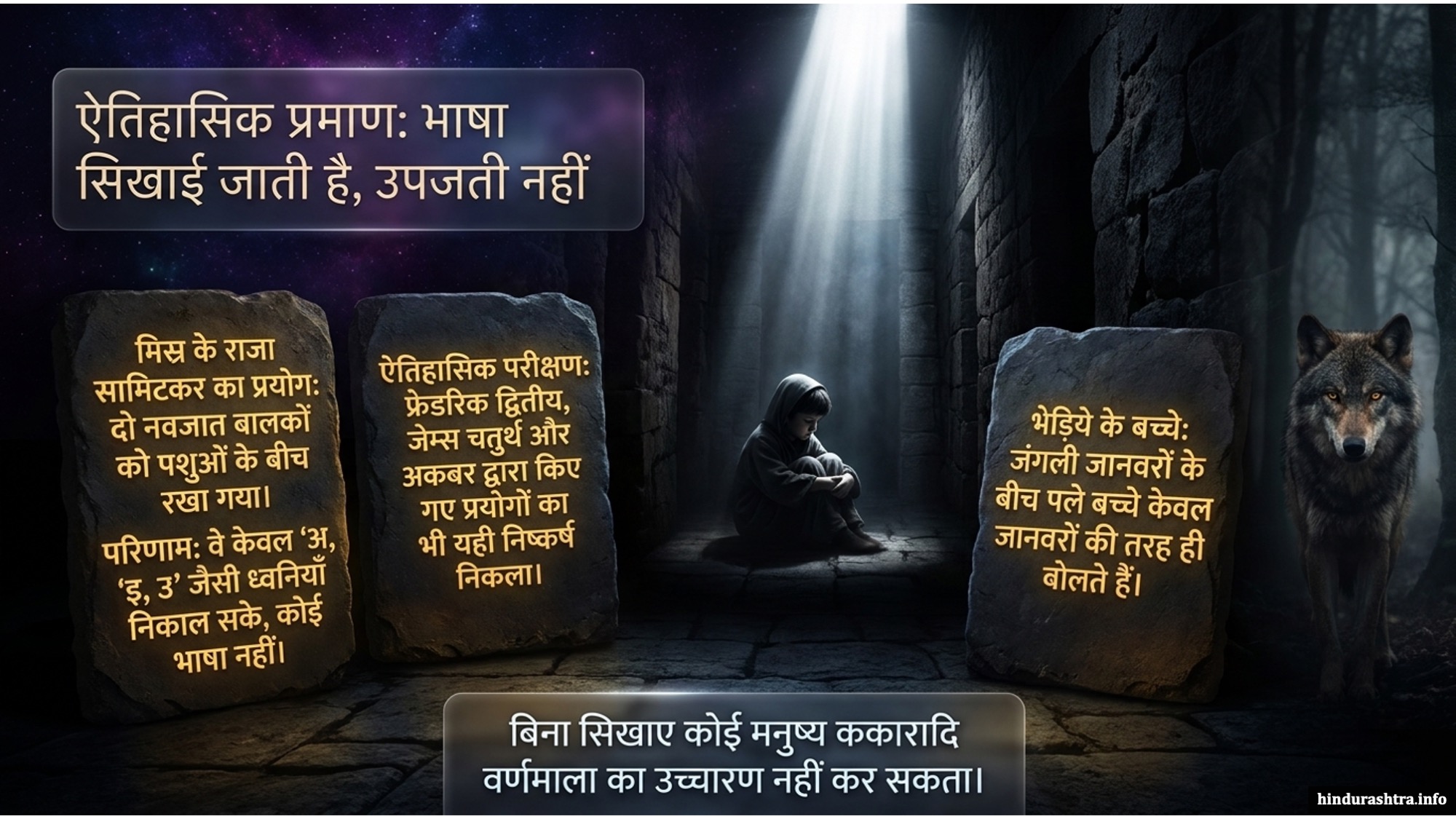
The assertion that language is an innate, self-arising evolutionary emergent is disproved by empirical observations of language-deprived humans, speech pathology, and historical isolation experiments. History records multiple controlled experiments conducted by monarchs seeking to discover the “natural” or unlearned language of humanity by isolating infants from all human speech.
- Egyptian Pharaoh Psammetichus (Psamtik [साम्तीक]): Placed two newborn infants under the care of mute shepherds, ordering that no human voice be uttered in their presence. Upon maturing, the children could produce only primitive, unarticulated vowel sounds such as a, i, and u, entirely failing to develop articulate speech.
- Monarchical Replications: Subsequent isolation experiments conducted by Emperor Frederick II, King James IV of Scotland, and the Mughal Emperor Akbar yielded identical outcomes. Deprived of human speech input, the isolated subjects failed to speak any natural language, uttering only basic raw vocalizations.
- Feral Children: Historical cases of children raised by wild animals (such as wolves) demonstrate that uninstructed humans mimic the sounds of their animal companions. They remain entirely incapable of articulating structured alphabetical letters (kakārādi [ककारादि]) without human intervention.
- Speech Pathology (Deaf-Mutes & Visually Impaired): Deaf-mute individuals possess intact vocal organs (throat, tongue, lips), yet remain mute precisely because they cannot hear articulate sounds to imitate them. They can only articulate basic vowels (a, i, u, e, o) and cannot produce complex consonants without specialized physical and visual training using mechanical instruments. If a deaf individual is also visually impaired, learning articulated vocalization becomes exponentially more difficult, proving that articulate speech is an acquired, instructed discipline rather than a spontaneous biological manifestation.
1.5 Section Transition
The failure of naturalistic, onomatopoeic, gestural, and evolutionary hypotheses demonstrates that human speech cannot emerge spontaneously from physical matter or uninstructed sound imitation. Language requires an antecedent, eternal source of knowledge, leading directly to the metaphysical framework of divine linguistic revelation (Śabda-Brahma [शब्द-ब्रह्म]).
- Metaphysical Architecture and Divine Revelation of Language (Śabda-Brahma)
2.1 Narrative Context & Strategic Importance
Having established that human speech cannot arise from naturalistic evolution or uninstructed human convention, philology must examine the metaphysical origin of language. Within the orthodox Vedantic tradition, language is not viewed as a transient human invention, but as an eternal, co-existent principle co-terminous with divine consciousness itself; the principle of Śabda-Brahma [शब्द-ब्रह्म]. Knowledge (Jñāna [ज्ञान]) and subtle speech (Sūkṣma Śabda [सूक्ष्म शब्द]) are intrinsically linked; no cognitive awareness can manifest in the cosmos without the structural framework of sound. Understanding this architecture is essential for recognizing why primordial language retains structural integrity while human derivatives undergo degradation over time.
2.2 The Inextricable Link Between Knowledge and Speech (Nāma-Nāmi Sambandha [नाम-नामी सम्बन्ध])
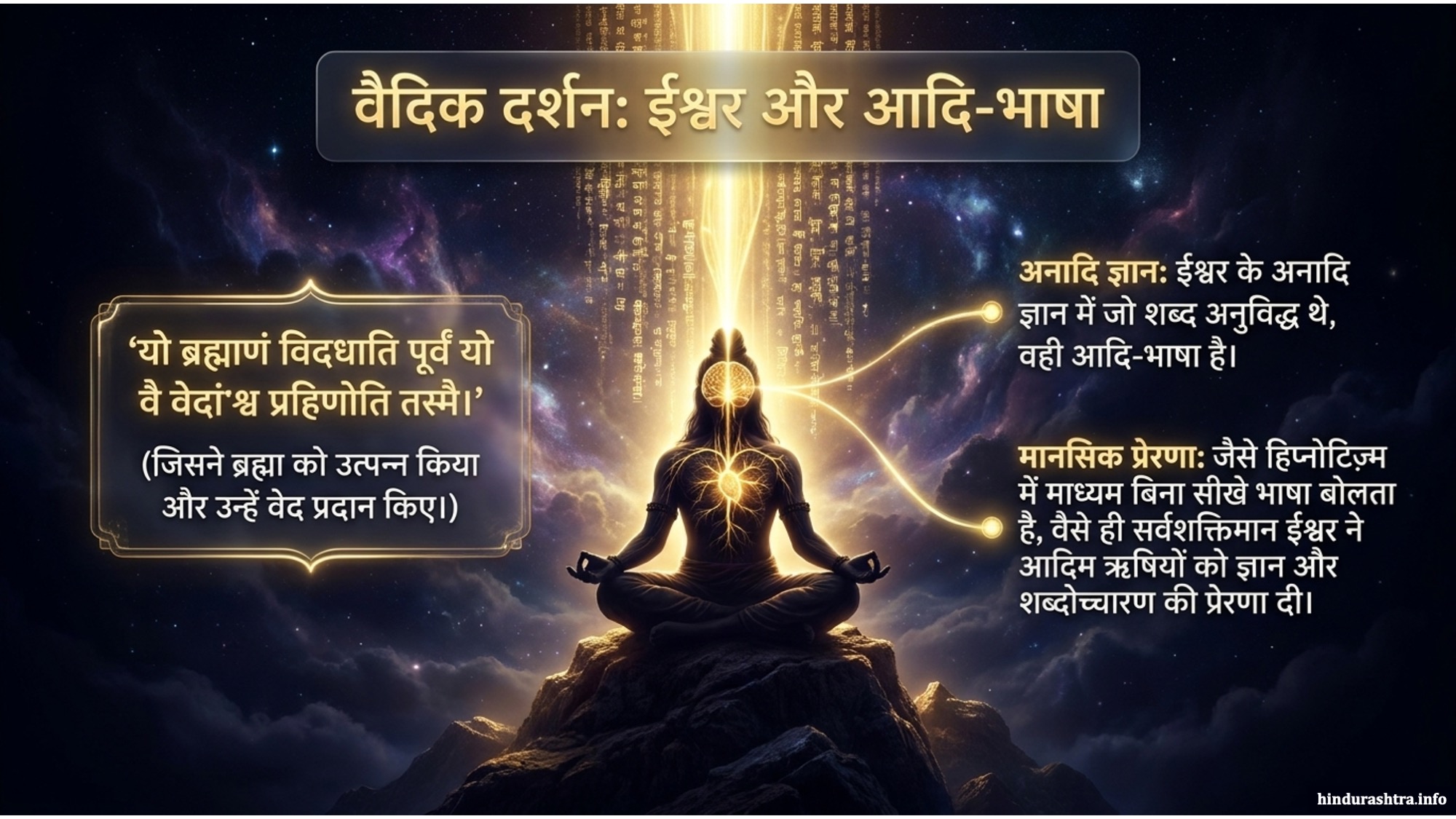
A foundational axiom of linguistic metaphysics is that all human and cosmic knowledge is pervaded by subtle speech (Sūkṣma Śabda [सूक्ष्म शब्द]). There is no cognition in the universe that exists independent of a verbal concept. The relationship between the name (Nāma [नाम]) and the entity named (Nāmi [नामी]) is co-dependent and co-arising (Nāma-Nāmi Sambandha [नाम-नामी सम्बन्ध]).
Creation itself operates through knowledge, intention, and action (Jñāna [ज्ञान], Cikīrṣā [चिकीर्षा], Kṛti [कृति]). Because divine creative action requires antecedent knowledge, and all knowledge is structured by sound, an eternal matrix of sound (Anādi Śabda-Samūha [अनादि शब्द-समूह ]) must exist within divine consciousness prior to physical manifestation.
To illustrate how unlearned speech can be imparted directly into human consciousness without mechanical biological evolution, consider the phenomenon of modern hypnotism. A skilled hypnotist can mentally inspire a subject to articulate complex words and sentences in languages the subject has never heard or studied in their conscious life. In the same way, the omnipotent Supreme Being (Parameśvara [परमेश्वर]) directly imparted the eternal word-matrix and cognitive capacity into the minds of the primordial human beings at the dawn of creation.
The transmission of this uncreated knowledge and primordial language follows an unbroken philosophical chain (Sampradāya [सम्प्रदाय]):
Parameśvara (Supreme Being) ⇒ Brahmā (Creator Being) ⇒ Ṛṣis / Sages (e.g., Vaśiṣṭha) ⇒ Lineage of Sons and Disciples
2.3 Epistemological Perspectives on Semantic Association: Mīmāṁsā vs. Nyāya vs. Western Classical Thought
The relationship between the word (Śabda [शब्द]) and its corresponding meaning (Artha [अर्थ]) has been a central debate across classical Indian and Western philosophical traditions. The central question is whether the connection between a word and its meaning is inherently uncreated (Aupattika [औत्पत्तिक]) or conventionally assigned (Pauruṣeya [पौरुषेय]).
The Pūrva Mīmāṁsā school asserts that the relationship between sound and meaning is eternal and uncreated (Autpattikastu śabdasyārthena sambandhaḥ [औत्पत्तिकस्तु शब्दस्यार्थेन सम्बन्धः]). Words do not refer merely to transient physical objects, but to eternal universal species (Jāti [जाति], such as Ghaṭatva [घटत्व] or “cowness”), which constitute the direct semantic import (Śakya [शक्य]) of the word. Because universal concepts are eternal, the relationship between the word and its meaning is inherently fixed and immortal.
The Nyāya school argues that semantic relationships are established by convention (Saṅketa [संकेत]), but stresses that this convention is non-human (Apauruṣeya [अपौरुषेय]). It is divine convention (Īśvara-Saṅketa [ईश्वर-संकेत]), wherein God instructs the primordial Ṛṣis that “Amuk śabdād amuk artho boddhavyaḥ” [अमुक शब्दात् अमुक अर्थो बोद्धव्यः] (“From such-and-such a word, such-and-such an meaning is to be understood”).
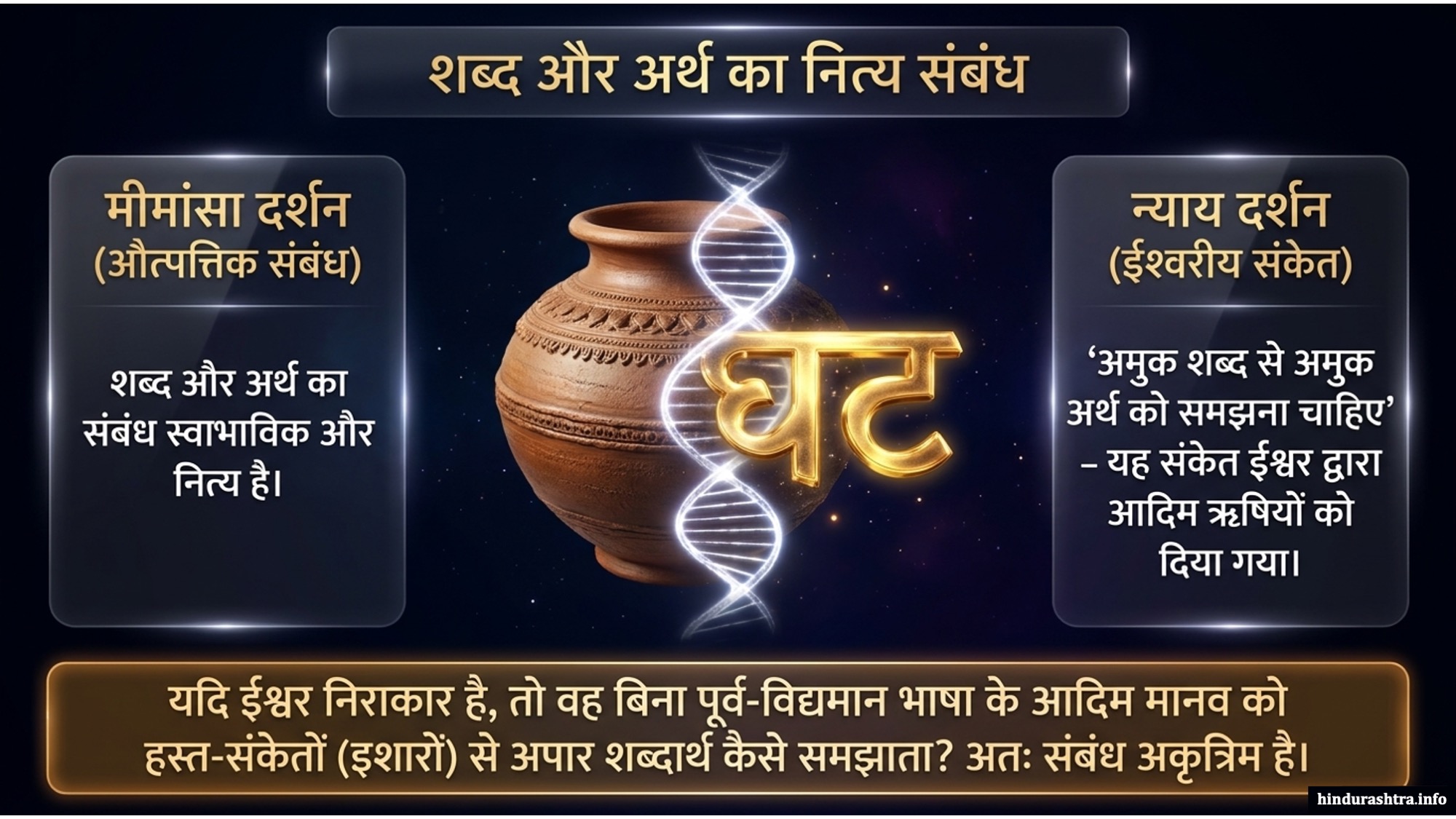
Mīmāṁsakas [मीमांसक] refute any human or gestural origin for these initial conventions, pointing out that God is intrinsically formless (Nirākāra [निराकार]). Even if assumed to take a temporary physical form (Sākāra [साकार]) through divine play (Līlā-śakti [लीला-शक्ति]), physical gestures like hand or brow movements (hasta-bhrū-kṣepa [हस्त-भ्रू-क्षेप]) are strictly limited and finite, whereas the ocean of words and meanings is boundless:
इन्द्रादयोऽपि यस्यान्तं न ययुः शब्दवारिधेः। Indrādayo ‘pi yasyāntaṁ na yayuḥ śabdavāridheḥ (“Even Indra and the gods could not reach the end of the ocean of speech.”)
This Vedic framework closely aligns with classical Western insights that rejected arbitrary linguistic origins:
|
School / Philosophical Thinker |
Core Linguistic Doctrine |
Textual / Philosophical Citation |
|
Pūrva Mīmāṁsā |
Inherent, eternal, and uncreated connection between word and meaning (Aupattika Sambandha [औत्पत्तिक सम्बन्ध]); direct import is the universal genus (Jāti [जाति]). |
[औत्पत्तिकस्तु शब्दस्यार्थेन सम्बन्धः] “Autpattikastu śabdasyārthena sambandhaḥ” (Pūrva Mīmāṁsā Sūtra 1.1.5). |
|
Nyāya School |
Relation established by Divine Will/Convention (Īśvara-Saṅketa [ईश्वर-संकेत]), imparted directly to primordial Ṛṣis. |
[अमुक शब्दात् अमुक अर्थो बोद्धव्यः] “Amuk śabdād amuk artho boddhavyaḥ” (Divine instruction model). |
|
Socrates |
Learning language is not acquiring new knowledge, but recollecting forgotten eternal knowledge (Anusmṛti [अनुस्मृति]). |
Socratic doctrine of linguistic and cognitive recollection (Meno / Cratylus). |
|
Plato |
Words and names possess a natural, non-arbitrary connection to essential forms (Eidos); language is grounded in innate archetypes. |
Cratylus dialogue (Theory of natural correctness of names). |
|
Henry Colebrooke |
Language is an innate spiritual instrument (Ātmika Sādhana [आत्मिक साधना]) intrinsic to human consciousness. |
Essays on the Religion and Philosophy of the Hindus. |
|
R.C. Trench |
Speech is a direct divine gift parallel to human intellect; spoken words are externalized thought. |
“God gave man speech just as He gave him intellect; for man’s thought is the word manifested.” (On the Study of Words) |
|
Max Müller |
The 400–500 ultimate roots (Dhātus [धातु]) are uncreated phonetic molds/matrices (Varṇātmaka Śabdoṁ kā Sāñchā [वर्णात्मक शब्दों का सांचा]). |
The Science of Language (Correlating verbal roots to Platonic forms). |
2.4 Eternal Linguistic Continuity (Anādi Paramparā [अनादि परम्परा]) and Trans-Cosmic Memory
Because language is divine in origin, its continuity is maintained across infinite cosmic cycles. The universe undergoes periodic creation and dissolution (Sṛṣṭi [सृष्टि] and Pralaya [प्रलय]). In the Pūrva Mīmāṁsā [पूर्व मीमांसा] view, cosmic dissolution is partial (Khaṇḍa Pralaya [खण्ड प्रलय]), meaning the physical order never entirely ceases to exist (Na kadācid anīdṛśaṁ jagat [न कदाचिदनीदृशं जगत्]), and the continuity of speech remains unbroken. In the Uttara Mīmāṁsā [उत्तर मीमांसा] (Vedānta [वेदान्त]) view, even during total cosmic dissolution (Mahāpralaya [महाप्रलय]), the Vedas and the eternal sound-meaning relationships remain preserved within the Supreme Being (Parameśvara [परमेश्वर]). Upon the dawn of a new cosmic cycle (Mahāsarga [महासर्ग]), God re-manifests the identical Vedic speech without altering its structural matrix.
This process operates through the law of Supta-Pratibuddha [सुप्त-प्रतिबुद्ध] (the sleep-awakening analogy). Just as an individual waking from deep sleep remembers their identity, name, and prior knowledge without needing to relearn them from scratch, highly evolved sages (Mantra-Draṣṭā Ṛṣis [मंत्र-द्रष्टा ऋषि]) recollect the divine words and Vedic mantras from previous cosmic cycles through spiritual memory.
वेदस्याध्ययनं सर्वं गुर्वध्ययनपूर्वकम् । वेदाध्ययनसामान्यादधुनाध्ययनं यथा ॥ “Vedasyādhyayanaṁ sarvaṁ gurvadhyayanapūrvakam |”“Vedādhyayanasāmānyād adhunādhyayanaṁ yathā ||” (All study of the Vedas is preceded by the teacher’s prior study, continuously extending backward in time. Because it is identical to modern Vedic study, this tradition of learning is eternal, like the cycle of seed and sprout.)
A striking illustration of this trans-cosmic memory is recorded regarding Sage Āvaṭya in the Yoga Bhāṣya [योग भाष्य] (3.18), who retained memory across ten complete cosmic iterations:
“दशसु महासर्गेषु पुनःपुनरुत्पद्यमानेन वर्तमानेन मया यत्किञ्चिदनुभूतं तत्सर्वं दुःखमेव” “Daśasu mahāsargeṣu punar-punar utpadyamānena vartamānena mayā yat kiñcid anubhūtaṁ tat sarvaṁ duḥkham eva.” (“In rising again and again across ten Mahāsargas, whatever experiences I underwent, all of them were ultimately sorrowful.”)
Sage Āvaṭya’s trans-cosmic memory demonstrates that language and Vedic knowledge are preserved across cosmic dissolutions, proving that speech is an uncreated, eternal continuum (Anādi Paramparā [अनादि परम्परा]).
2.5 Section Transition
Having established the metaphysical framework of Śabda-Brahma [शब्द-ब्रह्म] and its eternal transmission, we turn to examine the concrete grammatical architecture and comparative structural evidence that differentiate primordial Sanskrit from its degraded global offshoots.
- Grammatical Architecture and Comparative Typology: Primordial Sanskrit vs. Modern Structural Decay
3.1 Narrative Context & Strategic Importance
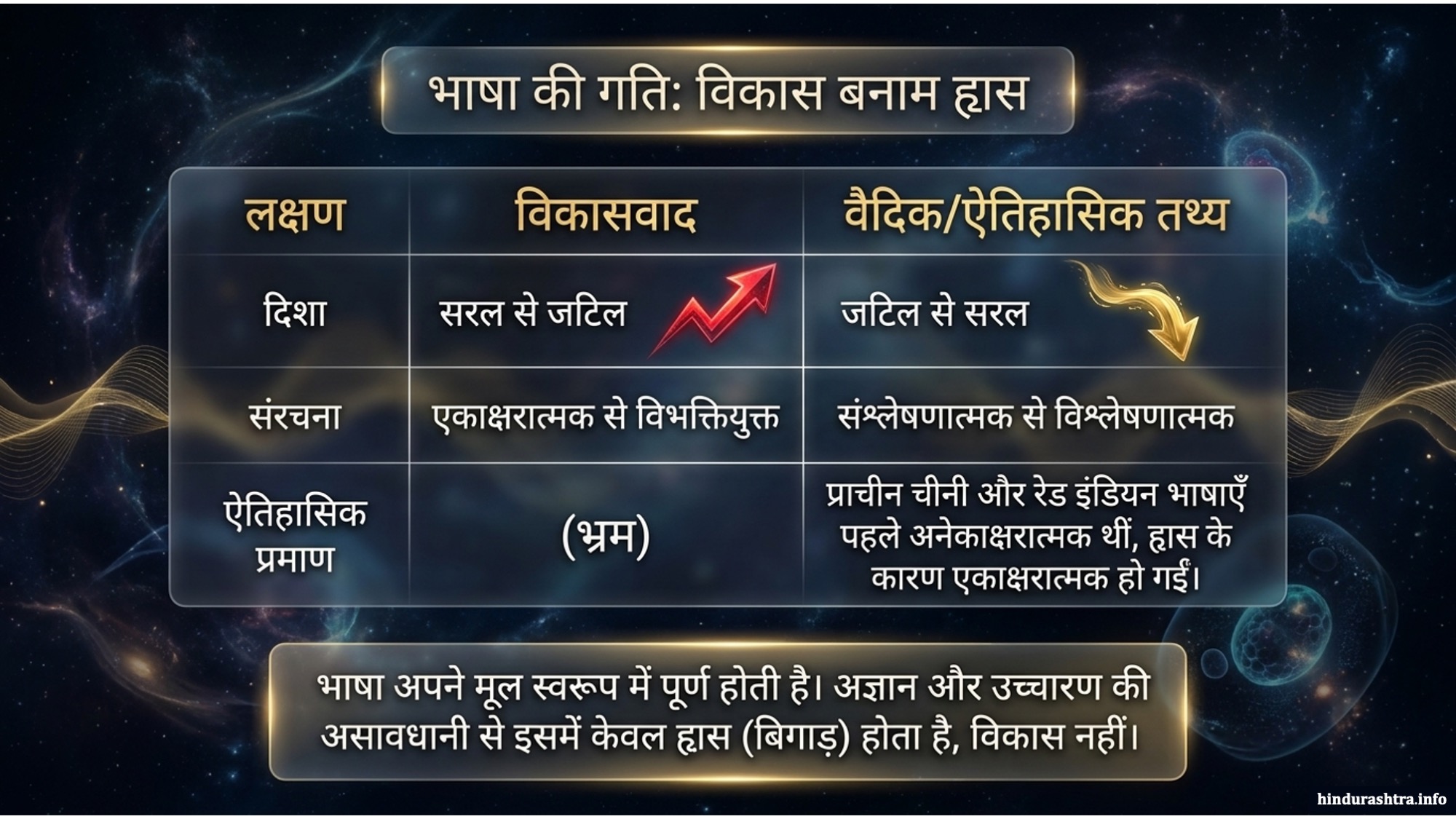
A primary assertion of evolutionary linguistics is that human speech evolved typologically from simple, uninflected monosyllabic sounds to complex, inflected grammatical systems. Comparative philology demonstrates the exact opposite: the historical movement of language is not upward evolution, but structural erosion and degradation (Apabhraṁśa [अपभ्रंश]).
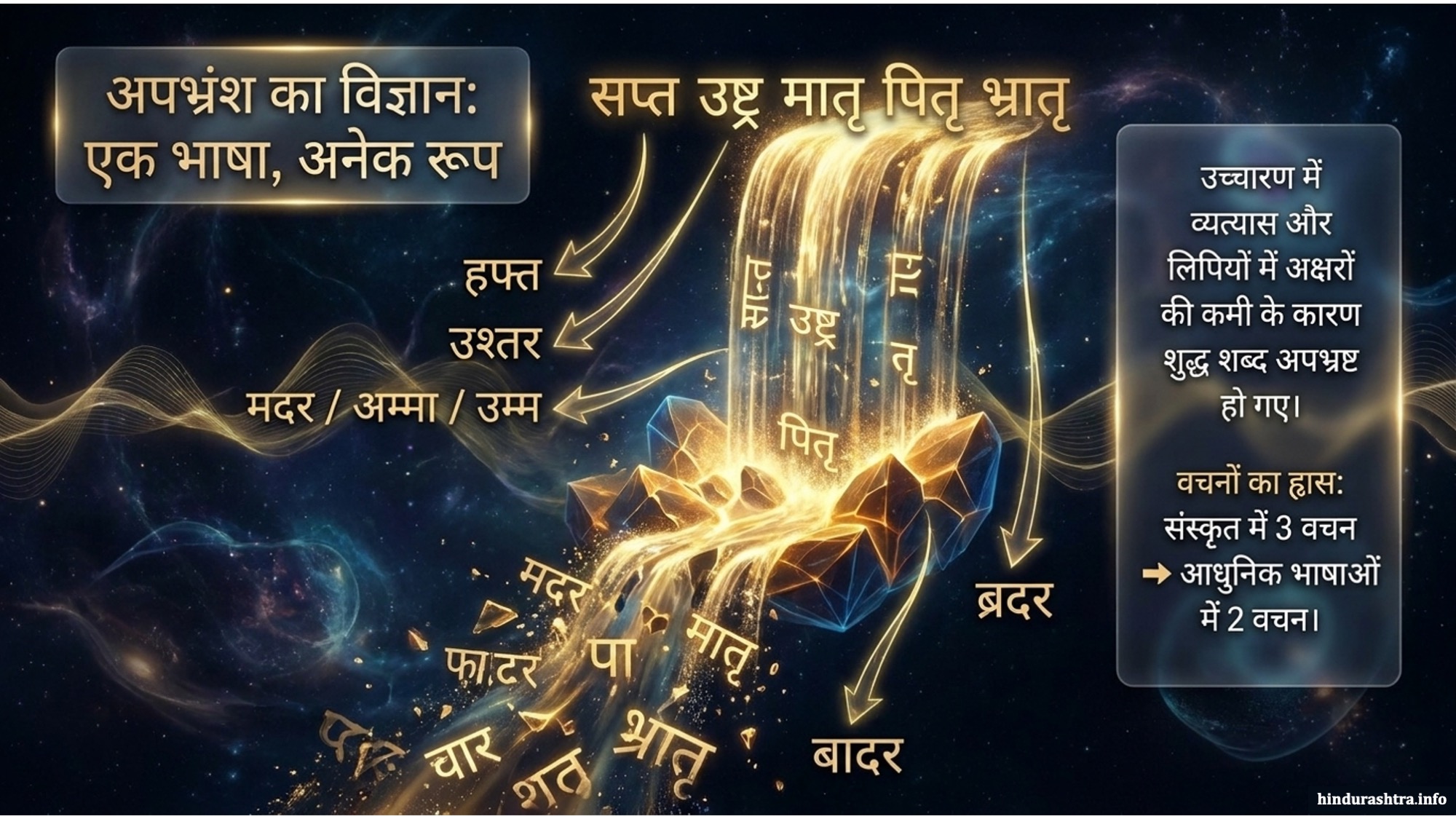
Examining grammatical architecture – specifically root systems, inflectional cases, dual numbers, and gender preservation reveals that primordial Sanskrit possesses an unmatched structural precision. Modern analytical and monosyllabic languages do not represent early evolutionary building blocks; rather, they are simplified, structurally eroded derivatives of an ancient, highly complex inflected language.
3.2 The Non-Pareil Structural Excellence of Sanskrit Grammar
Sanskrit grammar possesses an extraordinarily systematic structure that protects its vocabulary from corruption over millennia. While other language families undergo rapid structural decay, Sanskrit maintains structural stability through four foundational pillars:
- Dhātupāṭha [धातुपाठ] (The Core Root Matrix): The entire language is generated from an absolute foundation of approximately 400 to 500 uncreated root molds (Dhātus [धातु]). Every noun, verb, adjective, and adjectival derivative is systematically constructed by applying precise affixes and suffixes to these primary root matrices.
- Inflectional Mechanics (Vibhakti [विभक्ति] & Lakāra [लकार]): Sanskrit utilizes an extensive inflectional system comprising 8 grammatical cases (Vibhaktis [विभक्ति]) across nouns and pronouns, alongside 10 distinct verbal tenses and moods (Lakāras [लकार]). This allows words to retain precise grammatical relationships regardless of word order in a sentence.
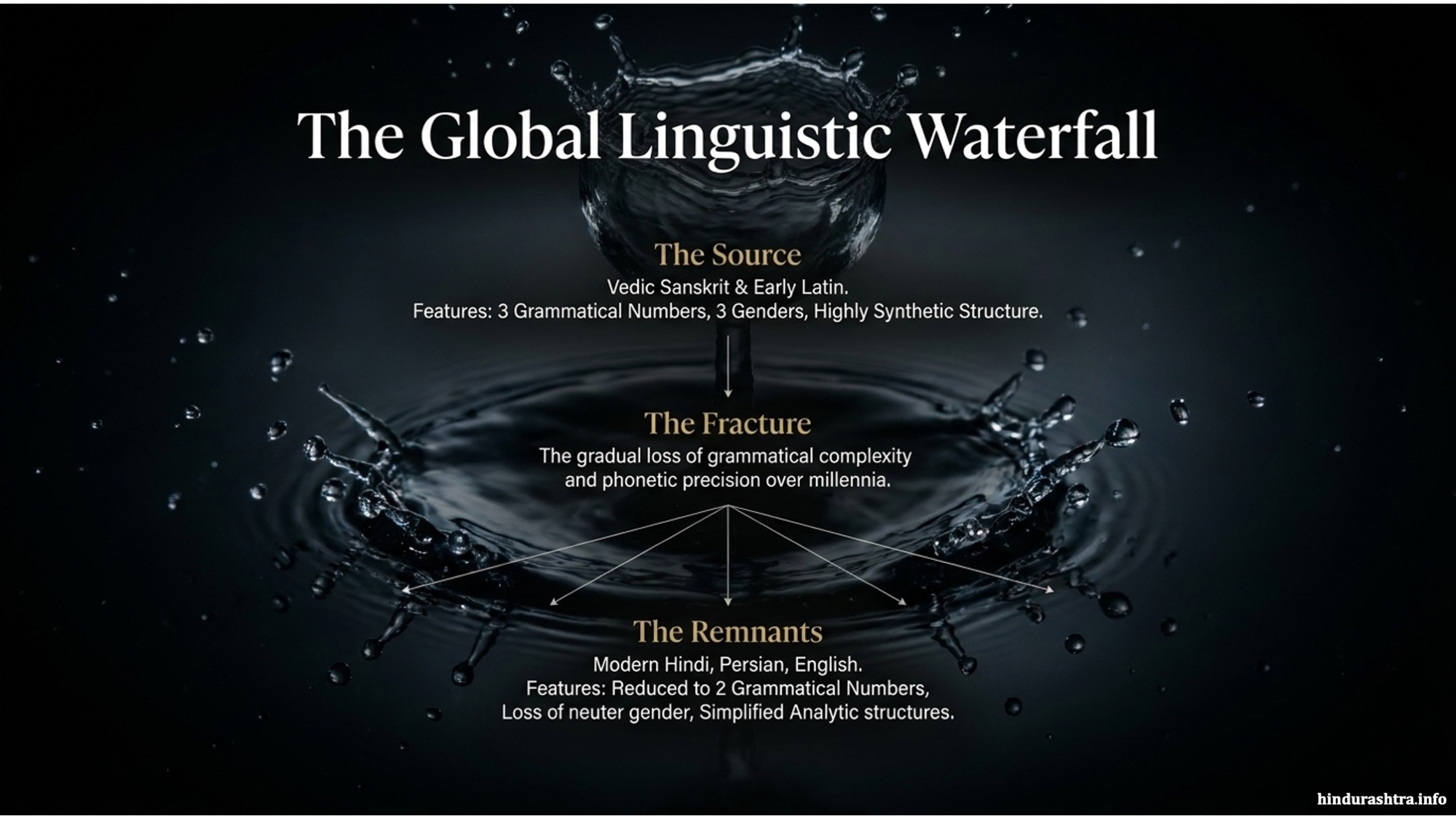
- Numerical and Gender Tripartitions: Sanskrit strictly preserves 3 grammatical numbers – Singular (Ekavacana [एकवचन]), Dual (Dvivacana [द्विवचन]), and Plural (Bahuvacana [बहुवचन]) as well as 3 distinct grammatical genders (Masculine, Feminine, Neuter). The retention of the Dual number and Neuter gender provides a degree of conceptual and mathematical precision unmatched by modern languages.
- Phonetic Combination and Accentuation Rules (Sandhi [सन्धि] & Svara-Vijñāna [स्वर-विज्ञान]): Sanskrit enforces mathematical exactitude in euphonic combination (Sandhi [सन्धि]), governing how adjacent sounds interact, alongside a rigorous system of pitch accentuation (Svara-Vijñāna [स्वर-विज्ञान]). These rules stabilize word pronunciation, making the language immune to casual phonetic corruption over hundreds of thousands of years.
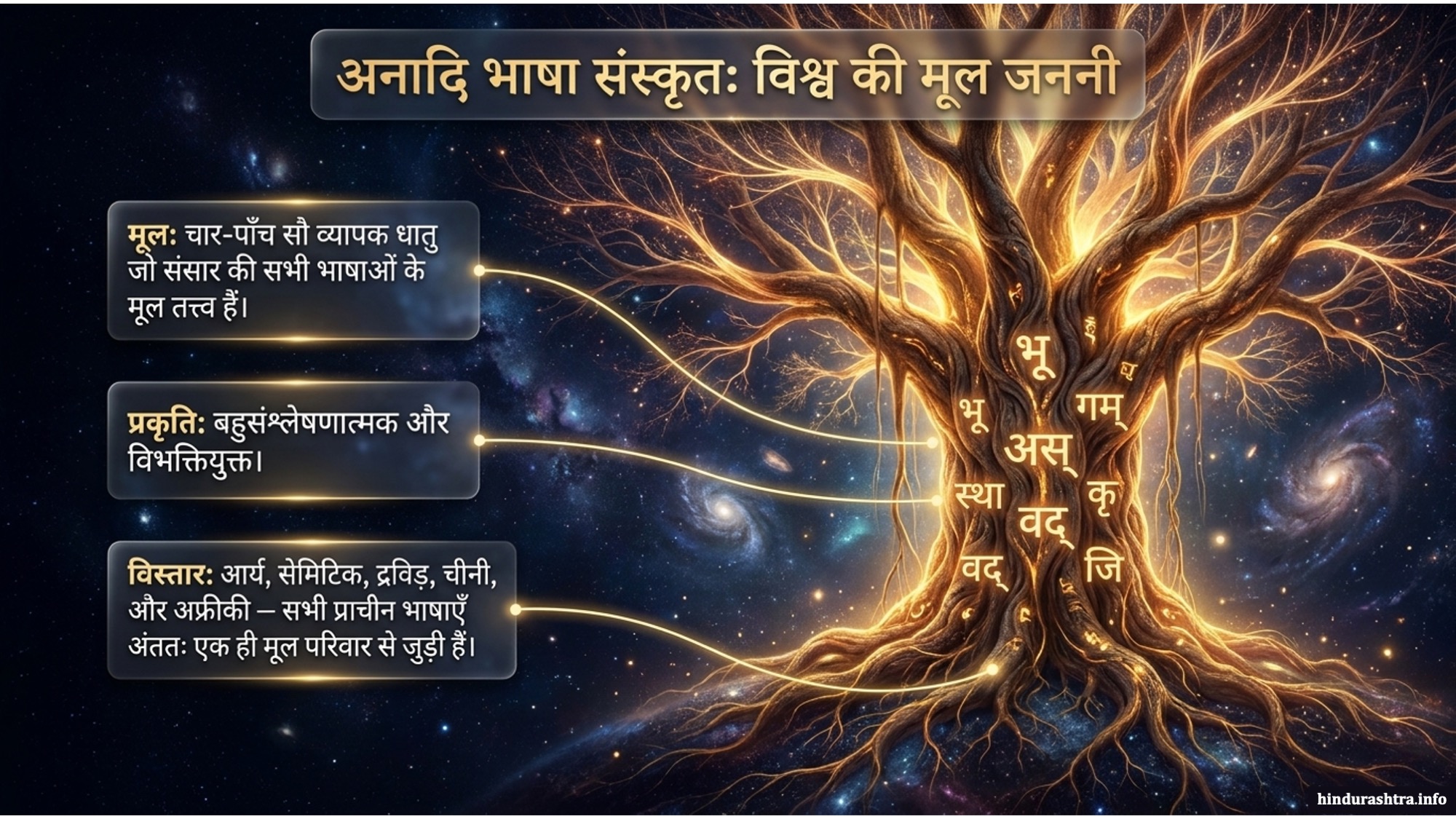
3.3 Deconstructing Evolutionary Typology: The Degeneration Paradigm
Evolutionary typologists categorize human languages into three linear developmental stages: ⇒ Isolating / Uninflected (e.g., Chinese) ⇒ Agglutinative (e.g., Turkish) ⇒ Inflectional (e.g., Sanskrit, Latin)
Philological evidence inverts this evolutionary hierarchy. As the philologist Davis observed in Harmonia, evolutionary progress in the essential function of language is impossible because the primary objective of language is static, universal, and complete across all human epochs. Furthermore, as Dr. Pat established, subsequent human generations have not created a single new verbal root (Dhūtu [धातु]); human societies do not experience linear linguistic evolution, but oscillate cyclically between states of civilization and wildness (jñāna-ajñāna kā jvar-bhāṭā [ज्ञान-अज्ञान का ज्वर-भाटा]).
Detailed historical research reveals that isolating, monosyllabic languages are not primitive starting points; they are modern, highly degraded descendants of ancient polysyllabic, highly inflected parent tongues.
For example, ancient Chinese was not originally an isolating, monosyllabic language. Historical research proves that early Chinese contained complex, multi-syllabic words that eroded over millennia into single monosyllables through vocal laziness and phonetic attrition. This erosion matches patterns seen in modern Indo-Aryan vernaculars: the Sanskrit polysyllabic noun Mukha [मुख] (“face”) degraded in Prakrit and Hindi to Mū̃h [मुँह], and ultimately slurred down to a monosyllabic Mū̃.
Similarly, ancient indigenous languages across the globe display complex inflectional and polysyllabic structures rather than “primitive” monosyllables:
- Red Indian (Native American) & Ethiopic Languages: Display highly complex, multi-synthetic (Bahusaṁśleṣaṇātmaka [बहुसंश्लेषणात्मक]) structures, combining multiple formal concepts into single inflected words.
- African Language Families: Consistently exhibit polysyllabic structural forms rather than primitive monosyllables.
- Ural-Altaic & Samoyedic Languages: Retain complex case inflections and full tripartite numerical systems directly parallel to Sanskrit.
This evidence confirms that complex, highly inflected polysyllabic structures represent the ancient primordial norm, while monosyllabic, non-inflected forms are modern structural simplifications resulting from linguistic decay.
3.4 Morphological and Grammatical Erosion Across Global Language Families
As ancient parent tongues dispersed geographically and degenerated into regional dialects through human carelessness and lack of phonetic education (Śikṣā-doṣa [शिक्षा-दोष]), they systematically shed complex grammatical features. The most prominent casualties of this structural decay are the loss of the Dual Number (Dvivacana [द्विवचन]), the disappearance of the Neuter Gender (Napuṁsaka Liṅga [नपुंसक लिंग]), and the collapse of the Case System (Vibhakti [विभक्ति]).
|
Parent Language (Ancient / Highly Inflected) |
Grammatical Features Preserved |
Derived / Modern Languages (Degraded Forms) |
Grammatical Features Lost or Corrupted |
|
Sanskrit |
3 Numbers (Singular, Dual, Plural) 3 Genders (M, F, Neuter) 8 Cases (Vibhaktis [विभक्ति]) |
Hindi, Marathi, Gujarati, Bengali |
Lost: Dual number discarded entirely; Neuter gender lost in Hindi/Bengali; 8 cases reduced to analytic postpositions. |
|
Zend (Avestan) |
3 Numbers (Singular, Dual, Plural) 3 Genders Full Case Inflections |
Persian, Pashto, Urdu |
Lost: Dual number eliminated; loss of complex inflections and gender distinctions in modern forms. |
|
Latin |
3 Numbers (in early forms) 3 Genders Complex Case System |
Romance Languages (French, Spanish, Italian) |
Lost: Complete collapse of the 3-number system down to 2 (Singular/Plural); elimination of Neuter gender; loss of case endings. |
|
Classical Semitic / Arabic |
3 Numbers (Singular, Dual, Plural) 3 Genders Preserved Case Endings |
Modern Spoken Arabic Dialects |
Lost: Dual verb conjugations and case markers discarded in colloquial regional speech. |
|
Samoyedic (Siberia / China) |
3 Numbers (Singular, Dual, Plural) 8 Grammatical Cases |
Spoken along Peitisi River (China) and Ob River (Siberia) |
Preserved Ancient Features: Direct retention of ancient 8-case and 3-number architecture, mirroring Sanskrit. |
3.5 Clarifying the Concept of Saṁskṛtā [संस्कृत]: The Grammatical Filtration Analogy
A common misconception among modern scholars is that the word Saṁskṛtā [संस्कृत] implies language was “constructed,” “fabricated,” or “evolved” out of primitive, pre-existing popular dialects (Prākṛta [प्राकृत]), just as raw wood or stone is carved into an artifact.
Philologically, this interpretation misunderstands the technical definition of Saṁskāra [संस्कार] (refinement). The correct analogy for Sanskrit grammatical refinement is the mechanism of a sieve or strain-filter (Galinī [गैलनी]).
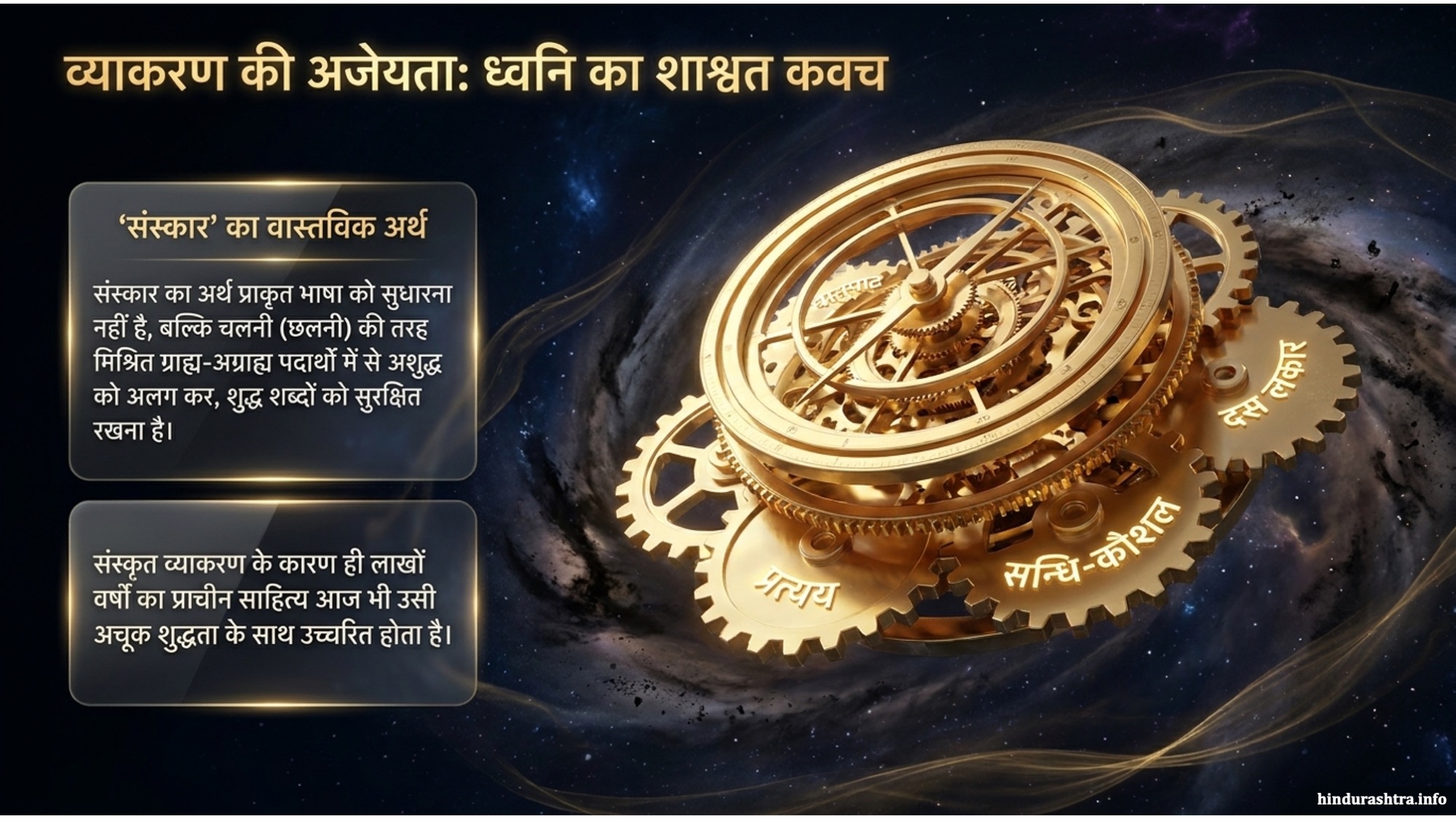
When a liquid contains a mixture of desirable fluid and unwanted debris, passing it through a sieve (Galinī [गैलनी]) does not alter or manufacture the liquid itself. Rather, the filter separates the clean, usable fluid (Sādhu [साधु]) from the unwanted impurities (Asādhu [असाधु]).
In exactly the same manner, Sanskrit grammar does not “create” new words out of primitive material. Instead, the rules and aphorisms (Sūtras [सूत्र]) formulated by ancient grammarians act as an analytical filter (Galinī [गैलनी]). They separate eternally valid, correct words (Sādhu Śabda [साधु शब्द]) from corrupted, slurred, and incorrect colloquial forms (Asādhu [असाधु] or Apabhraṁśa [अपभ्रंश]). Saṁskṛtā [संस्कृत] therefore signifies language that has been preserved in its pure, filtered state, free from dialectal corruption.
Mixed Vernacular Speech (Sādhu + Asādhu Words)
⇓
Grammatical Sieve
(Sūtras / Galinī Filter) ⇒ Discarded Corruptions (*Asādhu / Apabhraṁśa*)
⇓
Correct, Pure Words
(*Sādhu Śabda*)
[SANSKRIT]
3.6 Section Transition
Having demonstrated the structural excellence of Sanskrit and the systematic decay of derived languages, we now examine concrete philological evidence, tracing specific cross-linguistic sound shifts and etymological retentions across global language families.
- Comparative Philological Evidence: Cross-Linguistic Phonetic Shifts and Etymological Retentions
4.1 Narrative Context & Strategic Importance
The proposition that Sanskrit is the primordial root language (Anādi Bhāṣā [अनादि भाषा]) is empirically verified by comparative etymology. Across geographically isolated language families, core vocabularies (including anatomical terms, familial relationships, primary elements, and sacred concepts) consistently trace back to Sanskrit roots (Dhātus [धातु]). By analyzing systematic phonetic shifts (Uccāraṇa-bheda [उच्चारण-भेद]) and alphabet limitations in script systems (Lipi-doṣa [लिपि-दोष]), philology can trace how original Sanskrit terms mutated into global derivatives.
4.2 Mechanisms of Phonetic Shift (Uccāraṇa-Bhed and Lipi-Doṣa)
The divergence of global vocabularies from Sanskrit roots is governed by three primary mechanics of linguistic alteration:
- Dialectal and Consonantal Mutations: Dialectal articulation errors (Uccāraṇa-doṣa [उच्चारण-दोष]) systematically replace difficult consonants with softer or localized equivalents. A prominent historical example is the ancient Asura dialect, which regularly substituted the lingual consonant r (ra-kāra) with l (la-kāra). Thus, the formal greeting “He Arye!” (“O Noble One!”) mutated in Asura dialect to “Helay!” or “He Alaye!”.
- Colloquial Slurring and Truncation: Human vocal laziness tends to simplify complex consonantal clusters. For example, the precise Sanskrit word Sūkṣma [सूक्ष्म] (“subtle”) slurs into the Prakrit/vernacular Chuchham. Similarly, modern foreign words undergo identical slurring when adopted by uneducated speakers; such as the English word Ticket degrading into Tikas.
- Alphabet Limitations in Writing Systems (Lipi-Doṣa [लिपि-दोष]): When foreign scripts lack letters for specific phonetic sounds present in Sanskrit, systematic letter substitutions occur. For example, because the Arabic script lacks specific Sanskrit consonants like the hard palatal ch (cha-kāra) or compound labials, foreign renderings systematically substitute available letters:
- Sanskrit Charak ⇒ Arabic Sarak
- Sanskrit Kotpal ⇒ Arabic/Persian Kotwal
4.3 Comprehensive Etymological Mapping: Sanskrit Roots Across Global Families
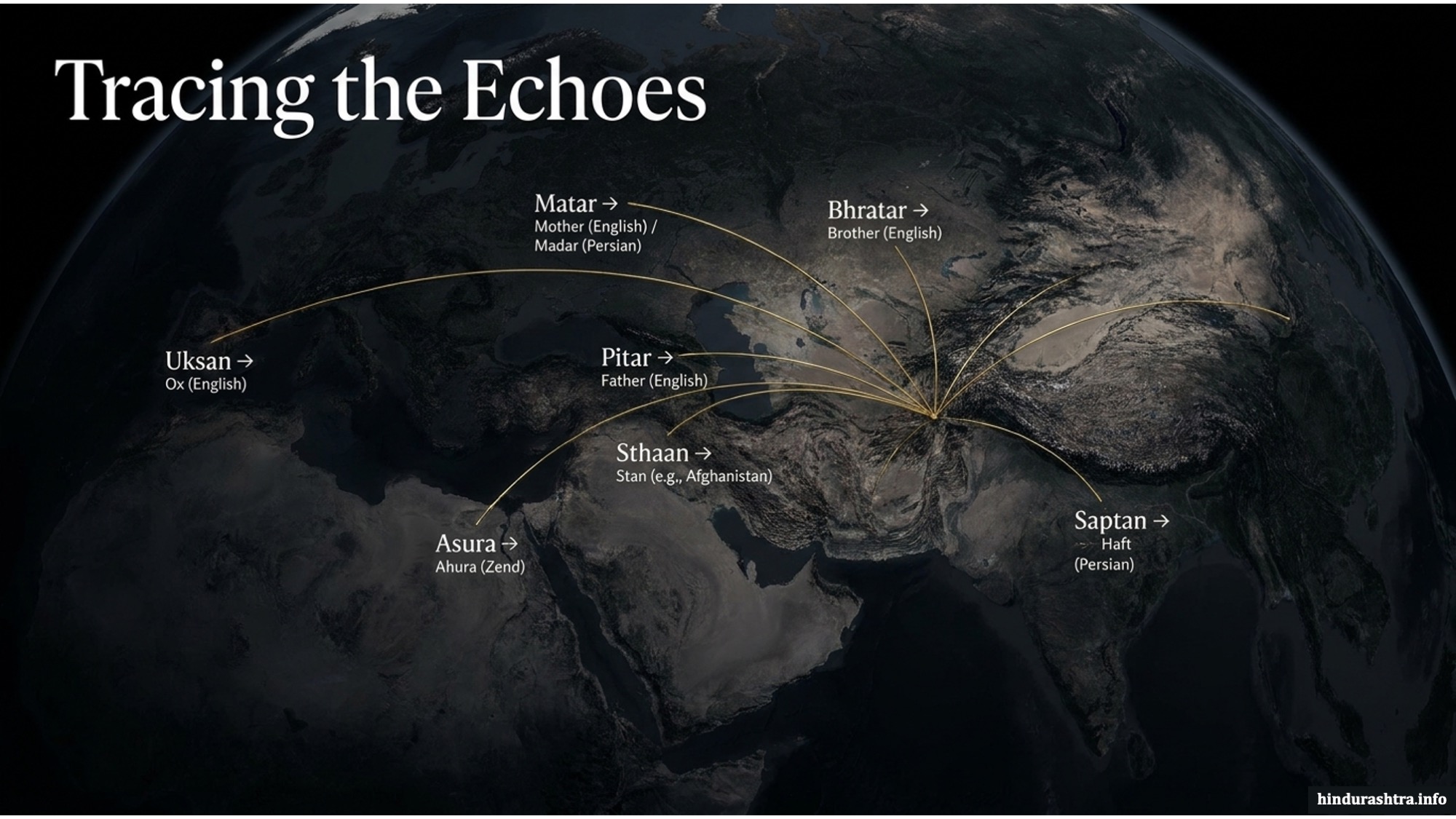
The following multi-column table maps the systematic phonetic shifts, semantic retentions, and structural modifications that occurred as original Sanskrit roots moved into global language families:
|
Target Language Family |
Sanskrit Original Term / Root |
Global Cognate / Derived Form |
Phonetic Shift & Structural Modification Analysis |
|
Zend (Avestan) |
Asura (Divine Being) Soma (Sacred Plant) Sapta(Seven) Āhuti (Offering) Bāhu (Arm) Paśu (Beast) Ukṣan (Ox) Tanu (Body) Jānu (Knee) Aṅguṣṭha(Thumb) Hasta (Hand) Pāda (Foot) Śira (Head) |
Ahur Hom HaftĀjuti Bāzū PasuOx Tan JānuAṅgust Hast PāSar |
Systematic sibilant-to-aspirate mutation (s ⇒ h); softening of dental and palatal consonants (s ⇒ h, p ⇒ f, b ⇒ v/z). Direct retention of anatomical vocabulary. |
|
Persian |
Tanu (Body) Jānu (Knee) Bāhu (Arm) Aṅguṣṭha(Thumb) Hasta (Hand) Pāda (Foot) Śira (Head) |
Tan Jānu BāzūAṅgust Hast PāSar |
Truncation of final vowels; retaining identical vocalic and consonantal bases for anatomical body parts. |
|
Classical European (Greek / Latin) |
Śatam (Hundred) Daśa (Ten) Aśman (Stone/Sky) |
Keton (Greek) Dec (Latin) Akman (Greek) |
Palatal-to-velar shift (ś ⇒ k); truncation of nominal inflectional endings. |
|
Germanic / English |
Ṛta (Order/Right) Uṣṭra (Camel) Sthāna (Place) Dhanī (Wealthy) Vidhavā (Widow) Gṛbh(Grasp/Seize) Bhrātar (Brother) Mātār (Mother) Pitār (Father) |
Right UshtarStan GaniWidow GriftBrother MotherFather |
Dental-to-fricative shift (bh ⇒ b, p ⇒f); retention of primary kin relations and fundamental verbs across Western European branches. |
|
Egyptian |
Atha (Now/Sequence) Āp (Water) |
Akh Āp |
Preservation of basic elemental and sequential terms; minor gutturalization (th ⇒ kh). |
|
Semitic / Arabic |
Harmya (Palace/Sanctuary) Sura (Divine/Angel) |
Haram Hur |
Script limitation (Lipi-doṣa [लिपि-दोष]) and aspirate shifting transforming sacred Sanskrit nouns into classical Semitic religious terms. |
|
African Languages |
Dhyāna (Meditation/Thought) Kartā(Doer/Creator) |
Dhānī Kāṭā |
Loss of aspirated palatals and compound consonants; retention of core spiritual concepts. |
|
Sino-Tibetan (Chinese) |
Sthāna (Place) Jana (Person) Ambā (Mother) Homa (Fire Ritual) |
Tan Jin MāGhoam |
Structural truncation from polysyllabic to monosyllabic forms; elision of initial consonant clusters (sthana ⇒ tan). |
|
East Asian (Japanese) |
Kā (Interrogative Particle) Bahutva (Abundance) |
Ka Motto |
Exact functional retention of interrogative grammatical particles (Kā) and quantitative modifiers (Bahutva ⇒Motto). |
|
Dravidian (Telugu / Tamil / Mal.) |
Tālu (Palate) Manju (Beautiful) Meṣa (Ram) Rājā(King) |
Talā ManchīMek Rājū |
Minor vocalic shifts at word endings; retention of foundational vocabulary across southern linguistic branches. |
4.4 The Primordial Maternal Root: Cross-Cultural Etymology of Ambā (अम्ब)
To further demonstrate the global retention of Sanskrit etymologies, we can examine the primary root for mother: Ambā(अम्ब). Rather than developing independently through random vocal evolution, this phonetic root is preserved across geographically isolated language families worldwide:
- Sanskrit: Ambā
- Syrian: Āmo
- Dravidian (Tamil / Telugu): Ammā
- Malayalam: Am
- Tulu: Appā
- Samoyedic (Siberia): Amm
- Scythian: Ammal
- Arabic: Umm
- Chinese: Mā
The near-identical presence of Ambā [अम्बा] across Siberian tundra, Semitic deserts, Southern Indian peninsulas, and East Asian river valleys demonstrates that these varied tongues derived their maternal terms from a single ancestral Sanskrit root.
4.5 Section Transition
Having established comparative etymological proofs across global languages, we must now examine the necessity of absolute phonetic and accentual precision in vocalization, along with the epistemological limitations of materialist science regarding speech phenomena.
- Rigorous Linguistic Precision, Accentuation Dynamics, and Epistemological Limits of Physical Science
5.1 Narrative Context & Strategic Importance
Because language is a precise divine matrix, subtle variations in vocalization produce dramatic changes in meaning. In Vedic phonetics, exact pitch accentuation (Svara-Śuddhi [स्वर-शुद्धि]) is critical. A subtle vocal or accentual offense (Svarāparādha [स्वरअपराध]) can entirely invert the semantic meaning of a word, transforming a beneficial invocation into a destructive acoustic weapon (Vāg-Vajra [वाग्वज्र]).
Furthermore, materialist science and evolutionary reductionism often attempt to dismiss this linguistic precision by reducing human speech to mere physical mechanics. However, an analysis of physical science reveals its inherent epistemological boundaries: materialist models are fundamentally incapable of explaining even basic biological functions, let alone the origin of human consciousness and language.
5.2 Phonetic and Accentual Precision: The Mechanics of Svara-Doṣa
In Vedic Sanskrit, pitch accentuation determines grammatical compound structure and semantic meaning. A classic historical example of the fatal consequences of accentual error (Svarāparādha [स्वरअपराध]) is documented in the invocation:
“इन्द्रशत्रो विवर्धस्व” ”Indraśatro vivardhasva”
During a sacred ritual, the officiant intended to invoke a force to slay Indra. The intended compound was a Tatpuruṣa Samāsa [तत्पुरुष समास] (a determinative compound meaning “Destroyer of Indra”). To achieve this meaning, the word required an Antyodātta [अन्तोदात्त] accent (pitch accent placed on the final syllable).
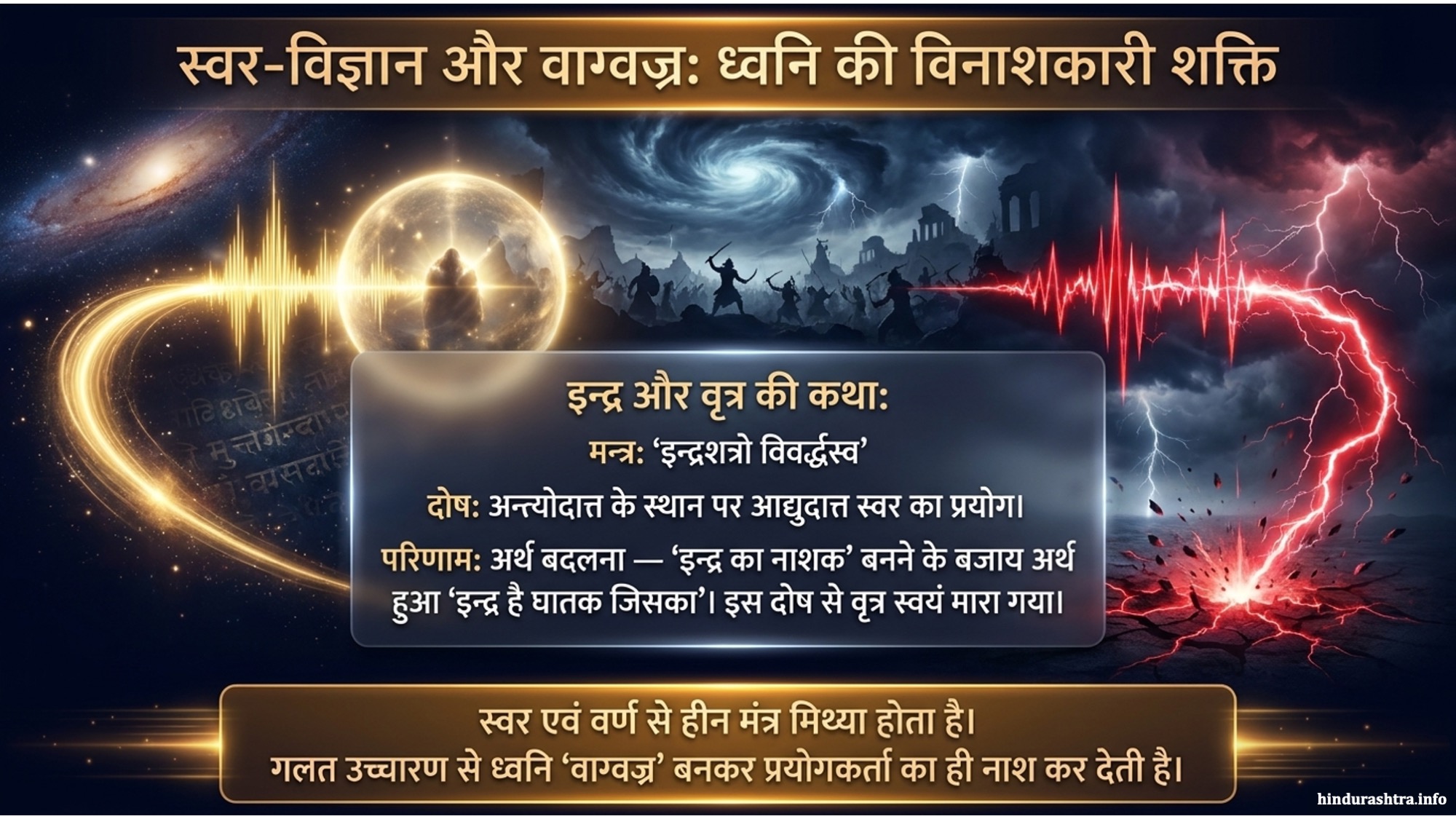
However, due to improper vocalization (Svara-doṣa [स्वर-दोष]), the officiant mistakenly shifted the pitch to an Ādyudātta [आद्युदात्त] accent (pitch accent on the initial syllable). This subtle shift altered the grammatical compound from a Tatpuruṣa to a Bahuvrīhi Samāsa [बहुव्रीहि समास] (a possessive compound), completely inverting the sentence’s meaning:
“INDRAŚATRU” ⇒ Antyodātta Accent (Final Syllable) ⇒ Tatpuruṣa Compound ⇒ “Slayer/Destroyer of Indra” (Intended Outcome)
“INDRAŚATRU” ⇒ Ādyudātta Accent (Initial Syllable) ⇒ Bahuvrīhi Compound ⇒ “One whose slayer is Indra” (Fatal Actual Outcome) ⇒ [Vṛtra Slain by Indra]
Because of this single accentual offense (Svarāparādha [स्वरअपराध]), the mantra functioned as a destructive acoustic weapon (Vāg-Vajra [वाग्वज्र]) against the speaker. Instead of empowering Vṛtra to destroy Indra, the inverted compound caused Vṛtra to be slain by Indra. This example underscores why traditional Sanskrit grammar enforces strict phonetic discipline (Svara-Vijñāna [स्वर विज्ञान]) to preserve structural and semantic integrity.
5.3 The Epistemological Limits of Materialist Science and Evolutionary Reductionism
Materialist science often attempts to reduce cognitive and linguistic phenomena to physical and chemical reactions. However, prominent physicists and researchers acknowledge that physical science cannot explain subtle biological mechanisms or mental phenomena.
Physical hypotheses are inherently provisional and shifting. What materialist science asserts as settled truth in one era is regularly disproved in the next. The human brain operates through cognitive dimensions far subtler than the physical instruments used to observe it.
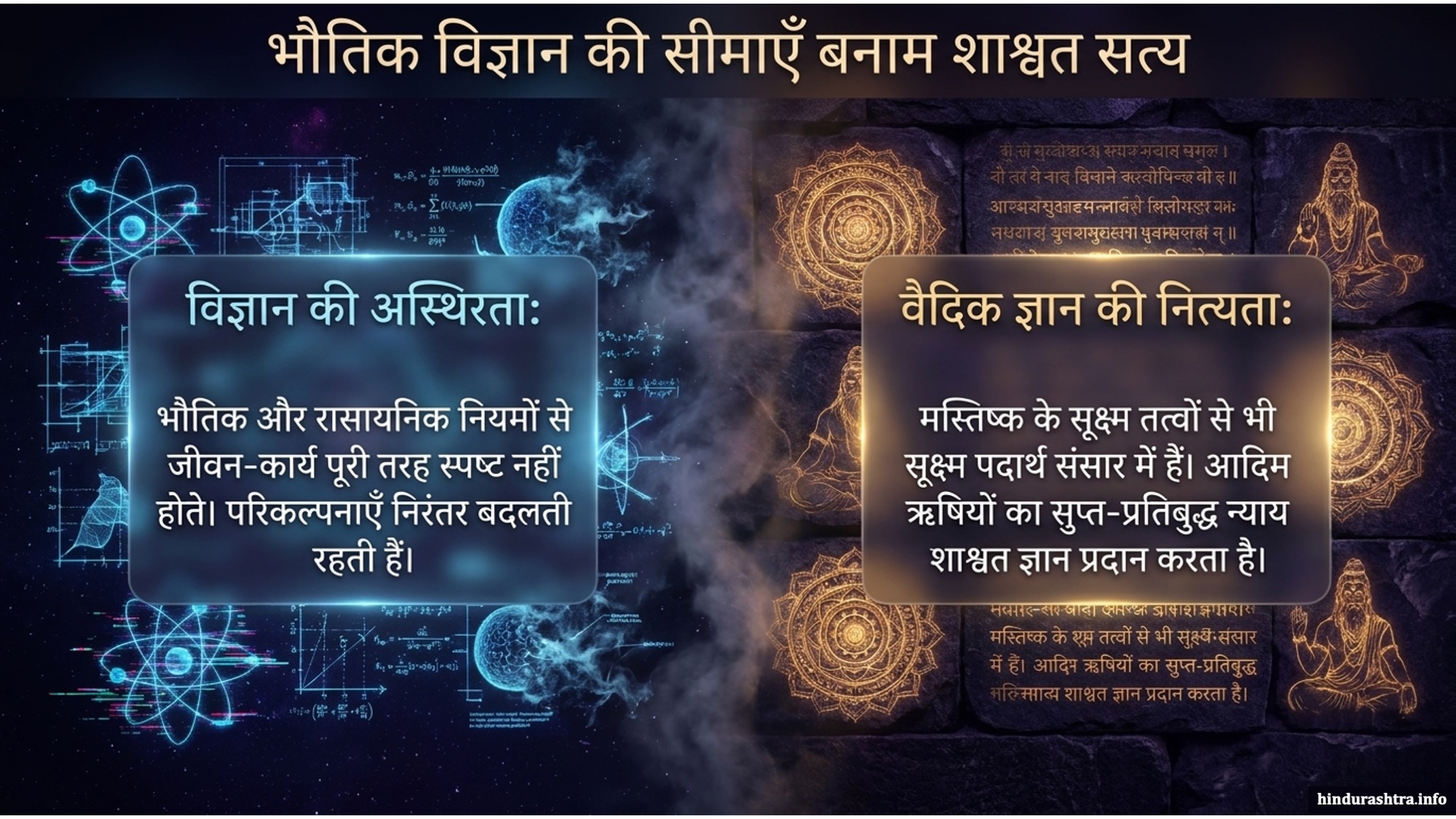
Epistemological Limitations of Physical Reductionism
- J.J. Thomson (Discoverer of the Electron): “As small secrets of the universe are unlocked, larger mysteries immediately rise to confront us. Science does not eliminate the wonders of the world; on the contrary, it renders them deeper and more unfathomable.”
- Frederick Soddy (Nobel Laureate in Chemistry): “Why two physical entities attract one another or separate from one another remains fundamentally unknown to modern science. The same limitation applies across all scientific domains; our physical hypotheses are constantly shifting.”
- Psychological and Biological Limits: Modern physics and chemistry cannot explain basic biological functions driven by mental states; such as why emotional sadness causes tears to flow from the eyes, or why physical exertion causes sweat to emerge from the skin. If physical laws cannot account for simple bodily excretions, they are entirely unequipped to explain complex cognitive architecture, human consciousness, or the origin of speech.
5.4 Final Synthesis: Sanskrit as the Primordial Anādi Bhāṣā
The comparative philological and philosophical evidence presented in this treatise leads to a definitive conclusion: language did not evolve through uninstructed naturalistic processes, primitive animal imitations, or gestural social contracts. Human speech requires prior instruction, a structured phonetic matrix, and an eternal cognitive framework.
Sanskrit stands as the uncreated, primordial language (Anādi Bhāṣā [अनादि भाषा]) from which all global language families have derived through structural decay (Apabhraṁśa [अपभ्रंश]). This conclusion rests on five core pillars:
- Epistemological Necessity of Prior Instruction: Isolation experiments and speech pathology prove that human beings cannot generate articulated speech (Vyakta Śabda [व्यक्त शब्द]) without prior instruction. Uninstructed humans produce only basic vowels, proving that language is an instructed discipline rather than an unguided evolutionary emergent.
- Refutation of Onomatopoeia and Gestural Contracts: Natural environmental noises are unarticulated (Avyakta [अव्यक्त]). Mapping raw noise into articulated letters requires a pre-existing phonetic matrix (Varṇamālā [वर्णमाला]). Furthermore, gestural communication and social conventions presuppose advanced linguistic intelligence rather than primitive ignorance.
- Metaphysical Primacy (Śabda-Brahma [शब्द-ब्रह्म]): Knowledge and subtle speech are co-dependent (Nāma-Nāmi Sambandha [नाम-नामी सम्बन्ध]). Divine consciousness transmits the eternal sound matrix through an unbroken lineage (Anādi Paramparā [अनादि परम्परा]), preserved across cosmic cycles through trans-cosmic memory (Supta-Pratibuddha [सुप्त-प्रतिबुद्ध] logic).
- Grammatical Priority over Degraded Derivatives: Sanskrit grammar, with its uncreated root matrix (Dhātupāṭha [धातुपाठ]), 8 cases, 3 genders, 3 numbers (including the Dual), and precise euphonic rules (Sandhi [सन्धि]) represents the fully preserved parent structure. Monosyllabic and non-inflected global languages are simplified, eroded offshoots rather than primitive evolutionary precursors.
- Empirical Etymological Retentions: Comparative etymology reveals that fundamental global vocabularies across Persian, European, Semitic, African, East Asian, and Dravidian families directly retain Sanskrit roots. Geographic variations are fully explained by documented mechanisms of dialectal shift (Uccāraṇa-doṣa [उच्चारण-दोष]), slurring, and script limitations (Lipi-doṣa [लिपि-दोष]).
Thus, Sanskrit is established not merely as one ancient language among many, but as the uncreated, perfect, and primordial source language (Anādi Bhāṣā [अनादि भाषा]) of human speech.