Divine Trusteeship
A Policy Framework for Ethical Governance and Institutional Accountability
1. The Philosophical Foundation of Rajadharma
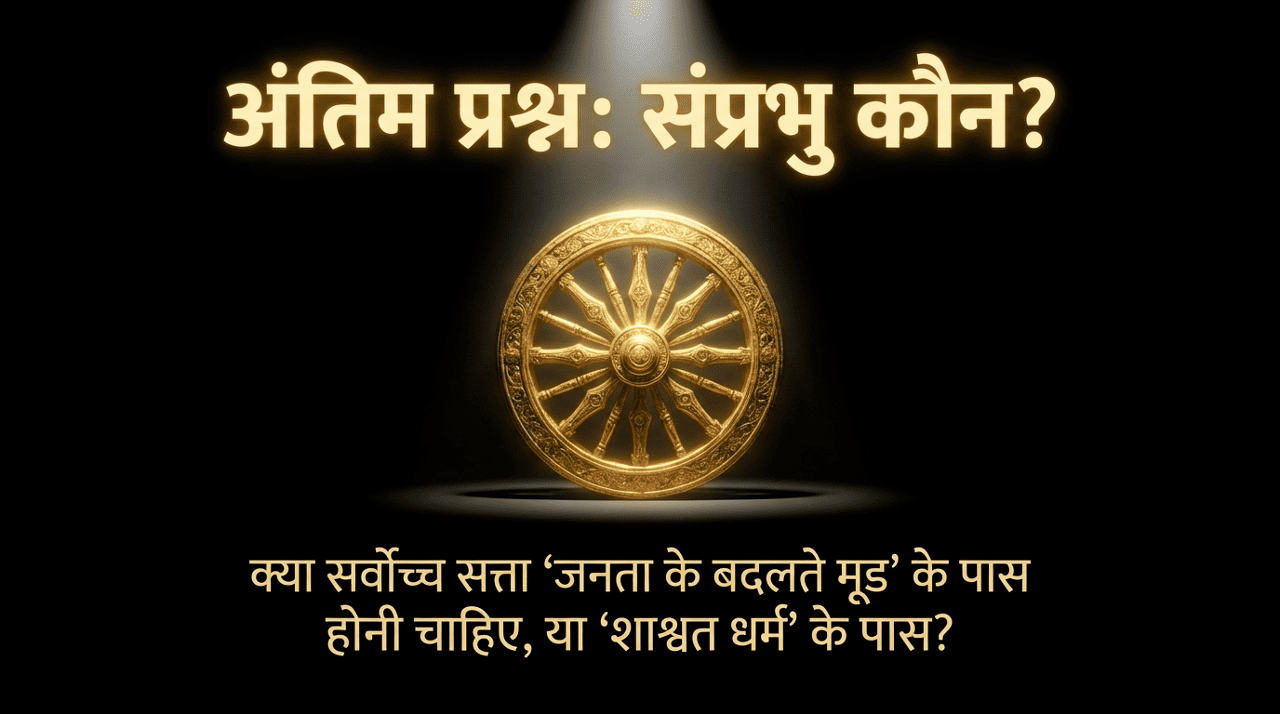
In the contemporary landscape of governance, where political power often oscillates between the volatility of populist whims and the stasis of bureaucratic inertia, the ancient concept of Rajadharma offers a sophisticated strategic alternative. Rajadharma is not a collection of religious dogmas; rather, it functions as a rigorous constitutional restraint that subordinates political authority to an eternal moral order known as Dharma. By embedding leadership within this ethical framework, the state is shielded from the hazards of absolute personal rule and the moral relativism of temporary majorities.
The Source of Sovereignty
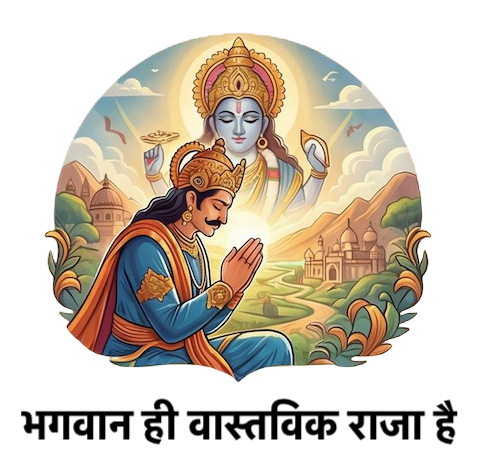
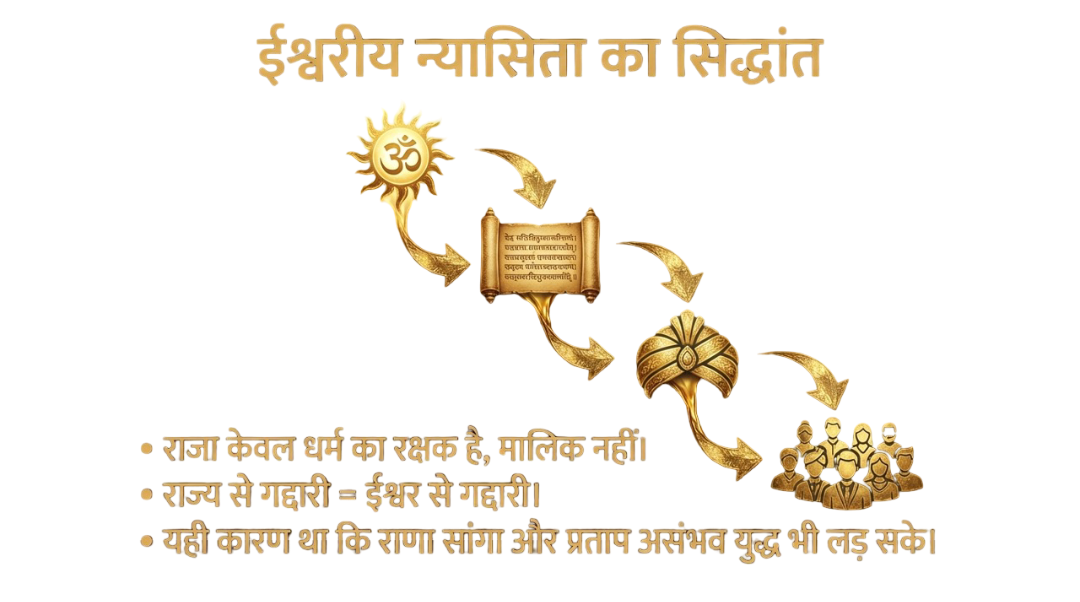
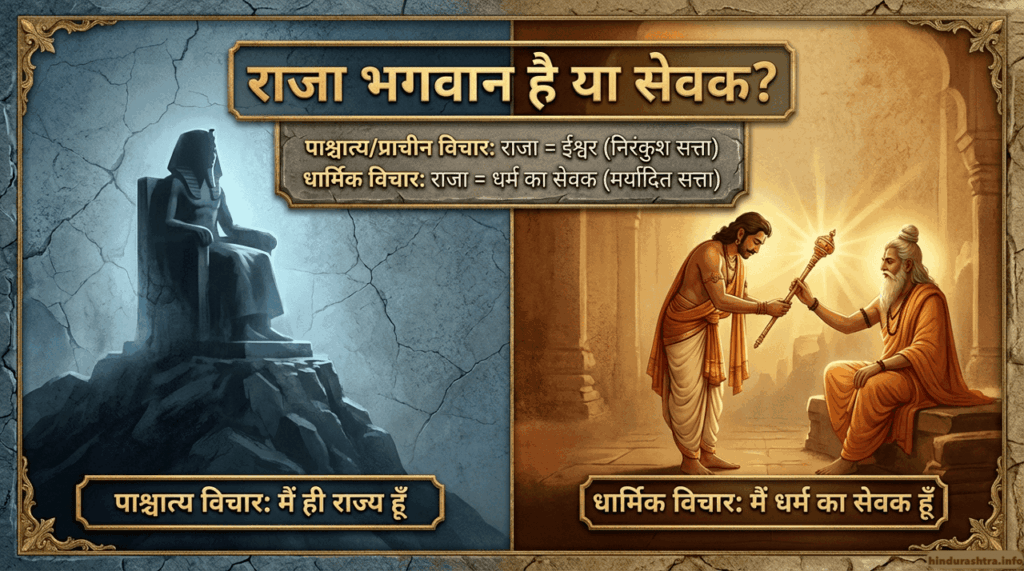
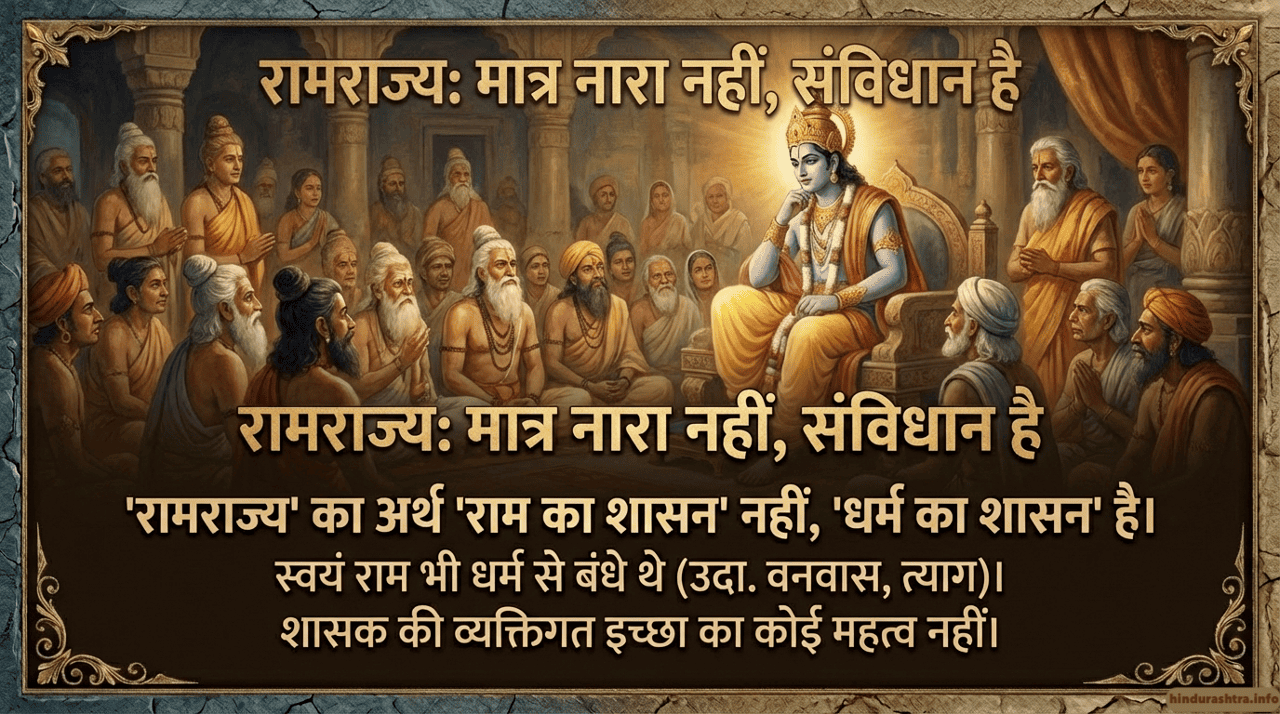
As articulated in the Mahabharata (Shanti Parva) , sovereignty is never the personal property of the ruler. The core mandate of the Shanti Parva is that sovereignty belongs exclusively to Dharma; the king is merely its executor. Shastric texts define the ruler as a “guardian” ( Rakshaka ) or “protector” rather than an “owner.” Sovereignty does not originate from the individual’s personhood or lineage alone, but from their strict adherence to the sacred duty of upholding the social and moral order. In this model, the state is an institutional trust, and the ruler is its temporary custodian.
The Supremacy of Dharma
Unlike modern concepts of absolute sovereignty—where the state or a legislative majority can fabricate laws regardless of moral consequence— Rajadharma asserts that Dharma is supreme, even above the king. This principle acts as a critical check on personal whim. If a ruler’s actions contradict the foundational Shastric laws, those actions lose institutional legitimacy. This creates a governance model where power is inherently limited, morally anchored, and functionally accountable to a standard higher than the ruler’s own will.
Foundational Principles for Ethical Leadership
- Subordination of Power: Political authority is a tool for the maintenance of Dharma, never an end in itself.
- Guardianship (Trusteeship): The ruler acts as a trustee of the people’s welfare and the land’s sanctity, preventing the exploitation of state resources for personal gain.
- Shastric Accountability: Leadership is bound by established ethical and legal codes that transcend individual preference and electoral arithmetic.
- Moral Restraint: Personal austerity and the prioritization of duty over rights are the primary metrics of leadership success.These abstract principles were not merely theoretical; they were institutionalized with remarkable success in historical kingdoms such as Mewar and Odisha, providing a blueprint for resilient governance.
2. The Historical Paradigm of Divine Trusteeship: Mewar and Odisha
The strategic utility of “Divine Trusteeship” served as a powerful mechanism for political legitimacy and institutional resilience. By transferring formal sovereignty to a deity, these states created a “theocratic trusteeship” that enabled them to survive extreme external pressures and existential threats.
The Mewar Model (The Eklingji Trust)
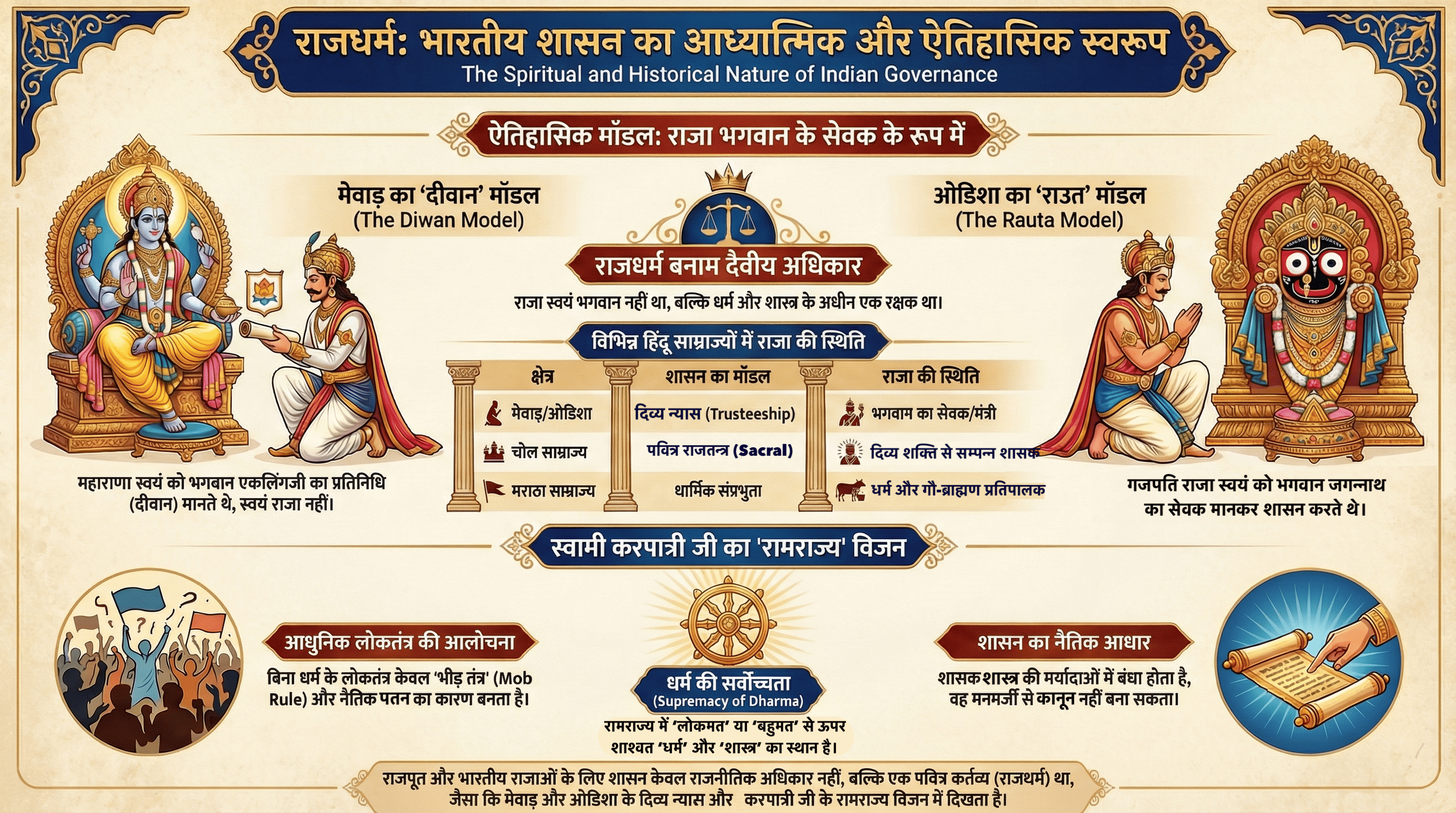
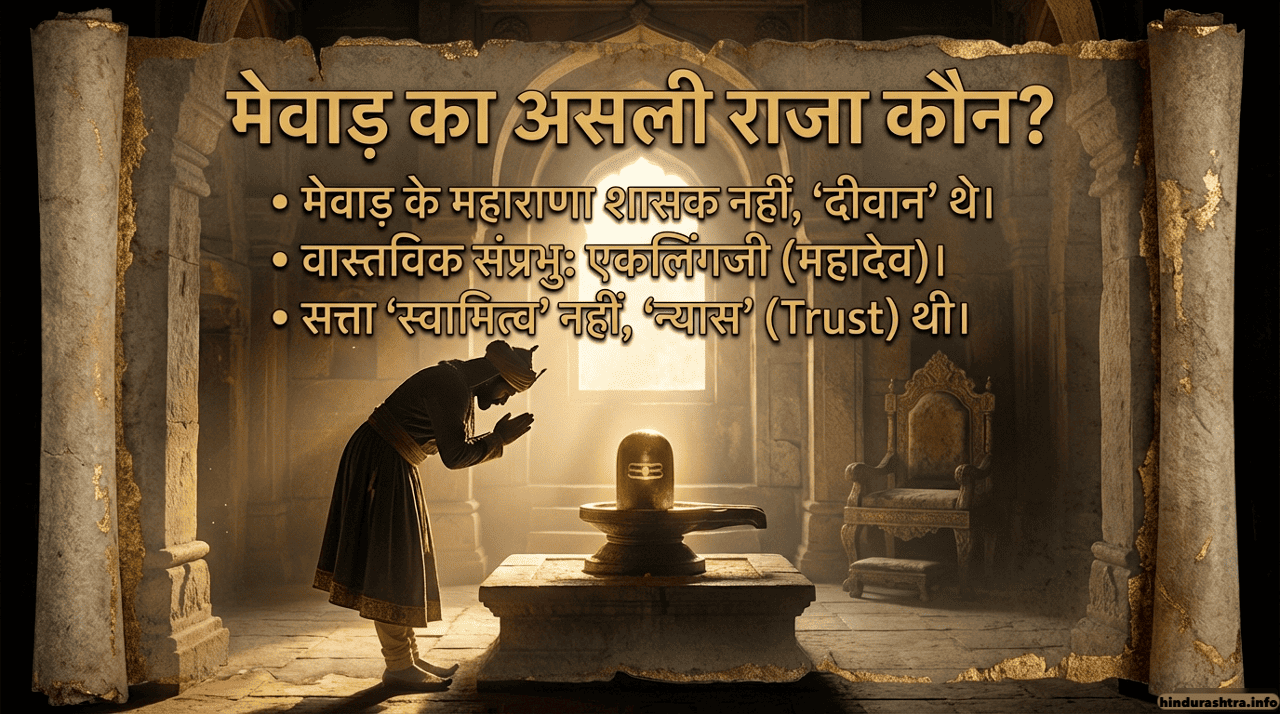
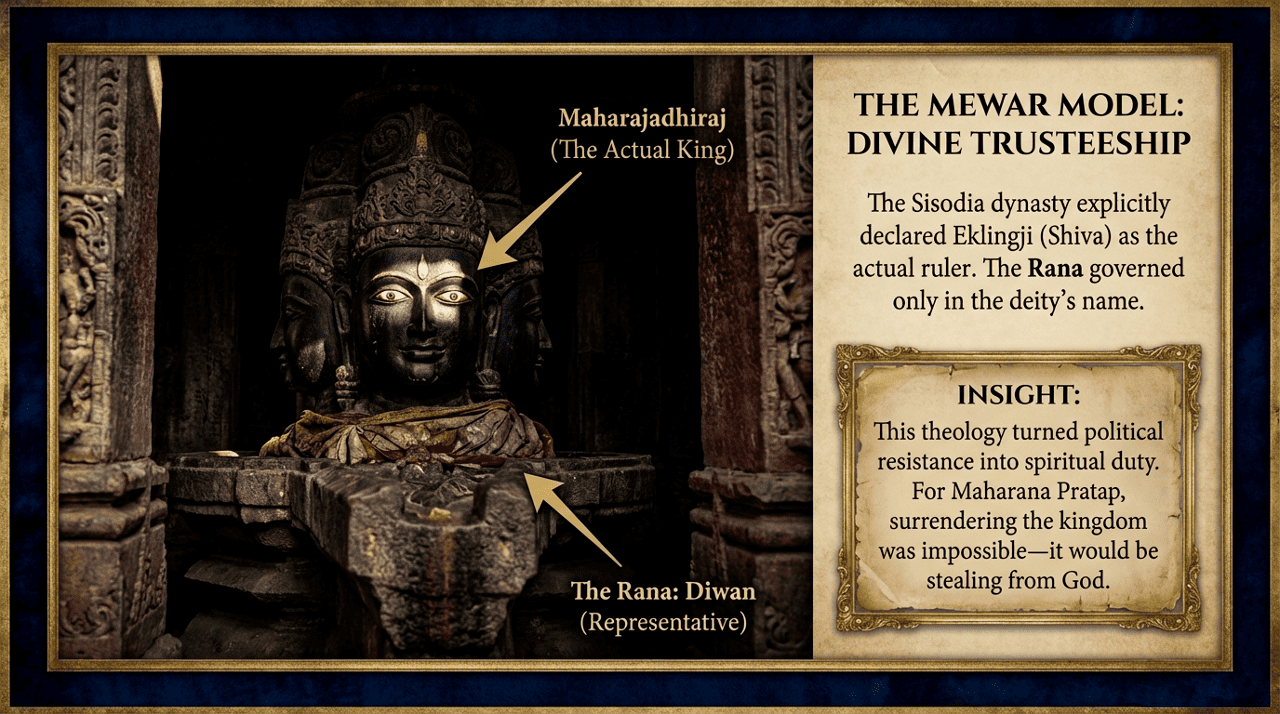
In the state of Mewar, the relationship between the Maharana and the deity Eklingji (Shiva) was institutionally unique. The Maharana did not claim to be the king; instead, the deity Eklingji was regarded as the Maharajadhiraj (Actual Ruler). The Maharana assumed the title of “Diwan” (Chief Minister or Representative). This framework transformed the kingdom into a sacred trust. During periods of existential conflict, such as the resistance of Maharana Pratap, this model ensured that submission to foreign rule was viewed not just as political defeat, but as a religious betrayal of the divine sovereign. This secondary layer of oversight—where the human ruler is answerable to a permanent, divine sovereign—precluded the rise of absolute tyranny.
The Odisha Model (The Jagannath Sovereignty)
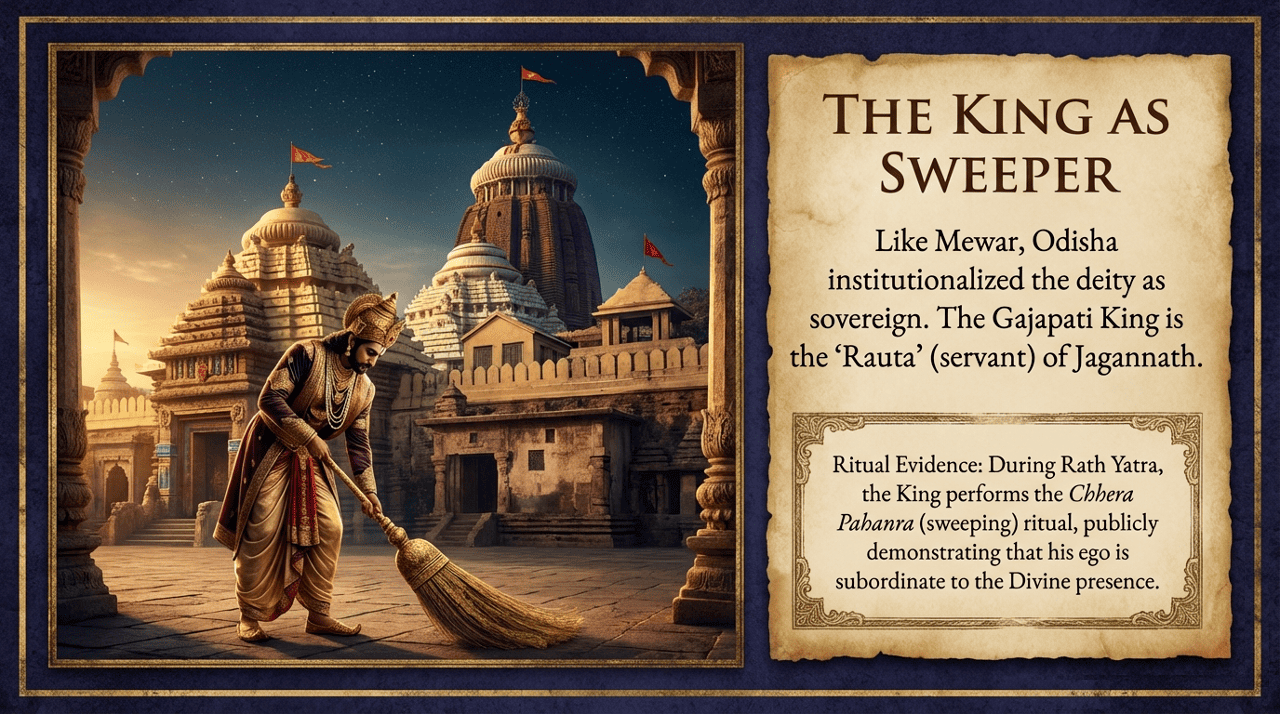
Similarly, the Gajapati kings of Odisha operated under the “Rauta” (Servant) model, declaring Lord Jagannath as the true sovereign. This was symbolically manifested in the ritual of Chhera Pahanra , where the king—the highest political authority—publicly performs the humble task of sweeping the chariot of the deity during the Rath Yatra. This act reinforced the ruler’s status as a servant-leader, subordinating royal ego to the divine order and demonstrating that even the highest administrator is a servant of the law.
Institutional Models of Divine Sovereignty
Dimension, Mewar Model, Odisha Model
Formal Sovereign, Eklingji (The Maharajadhiraj ), Lord Jagannath
Ruler’s Title, Diwan (Minister/Representative), Rauta (Servant)
Strategic Impact, Enhanced resilience; the state as a sacred trust ensured legitimacy survived political exile., High public accountability; king as the humble protector of the divine order.
While Mewar and Odisha represent the most explicit forms of the trusteeship archetype, other Hindu polities utilized variations of Dharmic sovereignty to achieve accountability.
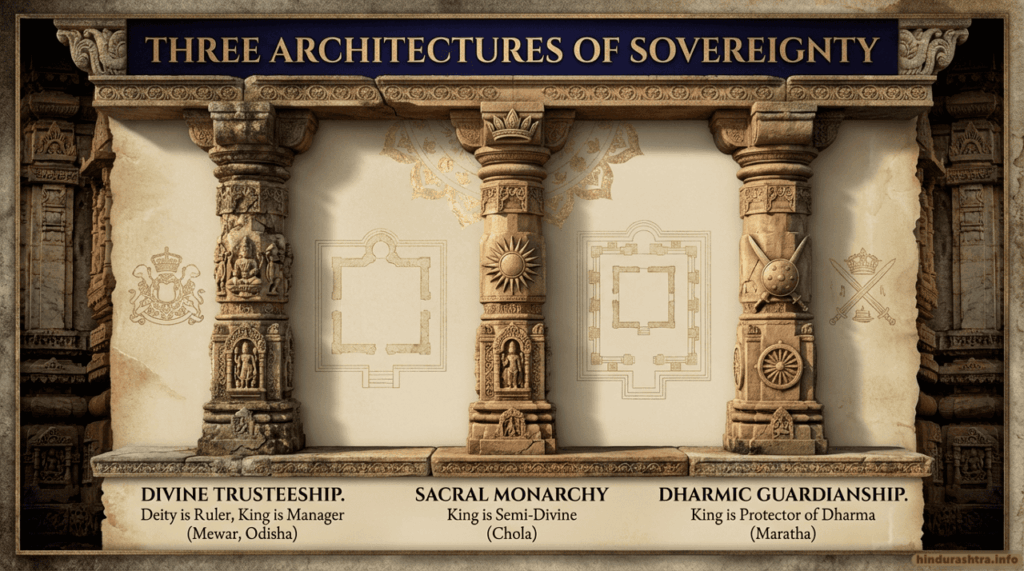
3. Comparative Archetypes of Dharmic Governance
The diversity within historical Hindu political models demonstrates that there was no “one-size-fits-all” approach to accountability. Understanding these variations is essential for modern institutional design, specifically regarding the checks placed upon the executive.
Chola vs. Maratha Models
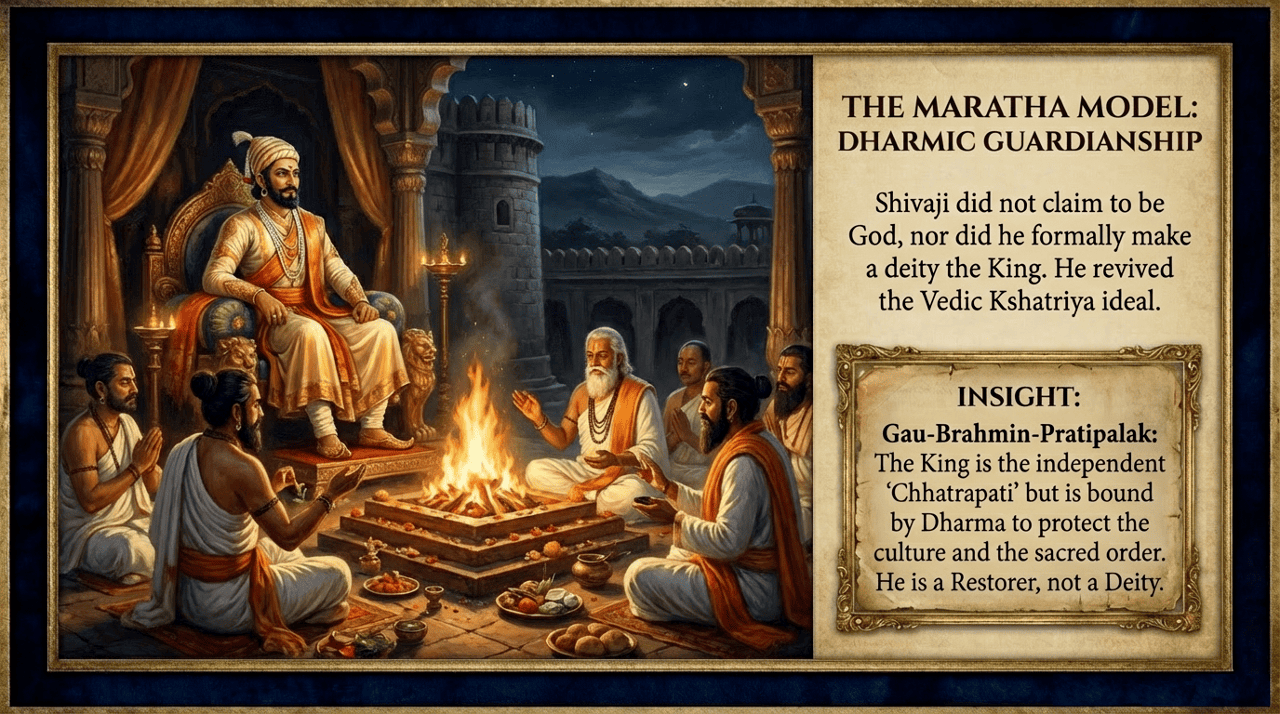
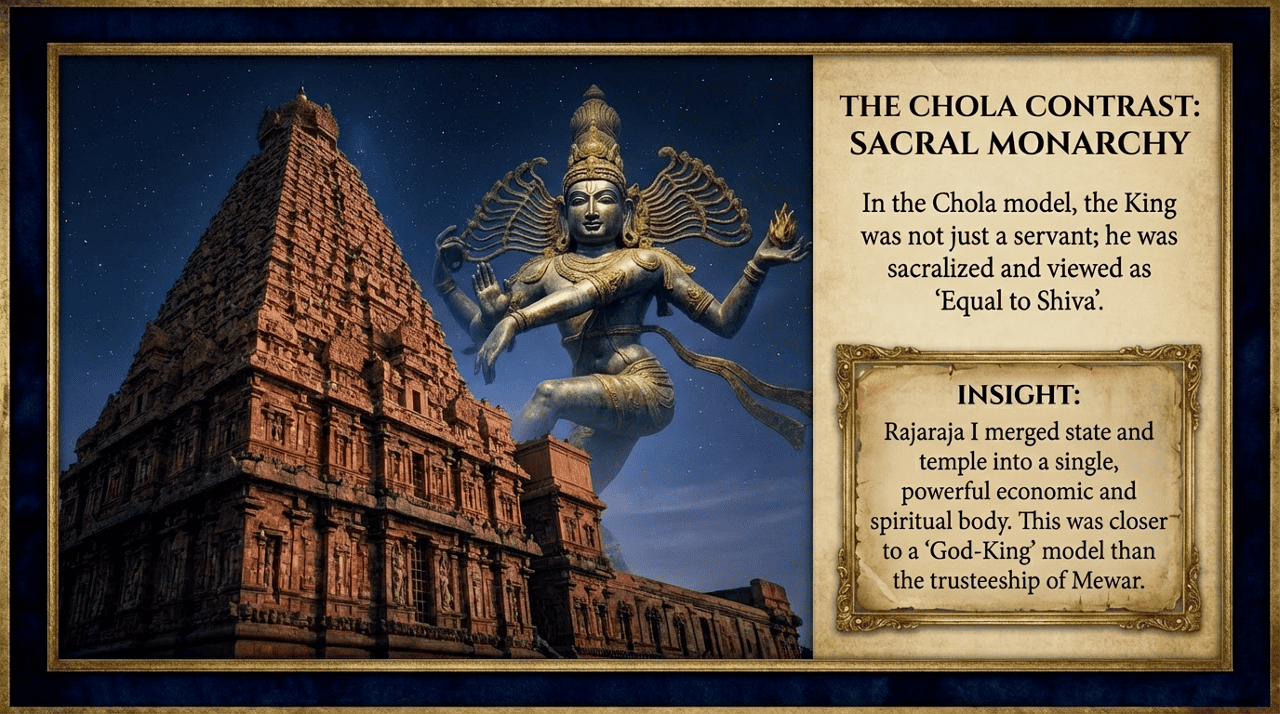
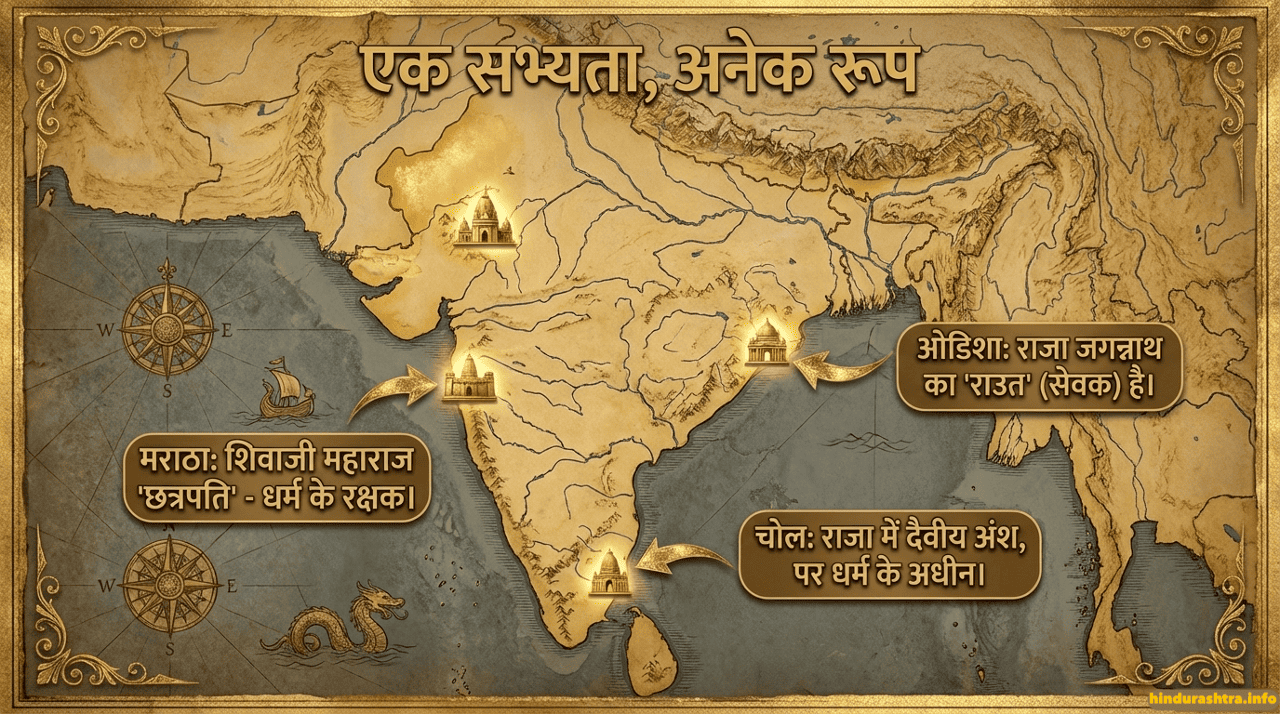
The Chola Model represented a “Sacral Monarchy.” Rulers like Rajaraja I integrated the state and the temple so closely that the temple functioned as an economic-administrative hub for the kingdom. While the Chola king was seen as divinely empowered—often described in inscriptions as “equal to Shiva”—he remained bound by Vedic rituals and the duty to maintain the temple-centric order. In contrast, the Maratha Model under Shivaji focused on “Dharmic Sovereignty.” Shivaji positioned himself as a Chhatrapati —a Dharmic restorer and protector whose legitimacy came from his active commitment to Shastric governance and the protection of sacred institutions, rather than a claim to semi-divinity.
Categorizing Sovereignty: Devaraja vs. Trustee
It is vital to distinguish between the “Devaraja” model (where the King IS God) and the prevalent “Divine Trusteeship” model (where the King RULES in the name of God). The “Devaraja” model, seen in certain ancient contexts, risks sliding into absolutism because the ruler’s will is equated with divine will. Conversely, the “Trustee” model (Mewar/Odisha) creates a mandatory secondary layer of oversight. By separating the office of the “Sovereign” (the Deity/Dharma) from the office of the “Administrator” (the King), the system ensures that the human leader is always subordinate to a higher, unchangeable standard.
Three Broad Archetypes of Hindu Polities
- God as King (Trusteeship): The human ruler is strictly a trustee (e.g., Mewar, Odisha). So What? This model minimizes the ruler’s ego and maximizes institutional longevity by making the state’s identity independent of the individual leader.
- Sacralized Monarch: The ruler possesses a divine aura and utilizes the temple as an economic-administrative hub (e.g., Cholas). So What? This creates a high degree of central authority and resource mobilization centered on a divinely sanctioned figure.
- Dharmic Protector: The ruler is a restorer of the ancient moral order and protector of sacred geography (e.g., Marathas). So What? Legitimacy is earned through the active defense of societal values and adherence to traditional law, providing a clear metric for ruler performance.
4. The Modern Synthesis: Swami Karpatri Ji’s Dharmic Critique
In the 20th century, Swami Karpatri Ji systematized these classical models into a modern political theory known as Ramrajya , challenging the secular and socialist assumptions of the post-colonial era.
Critique of Popular Sovereignty
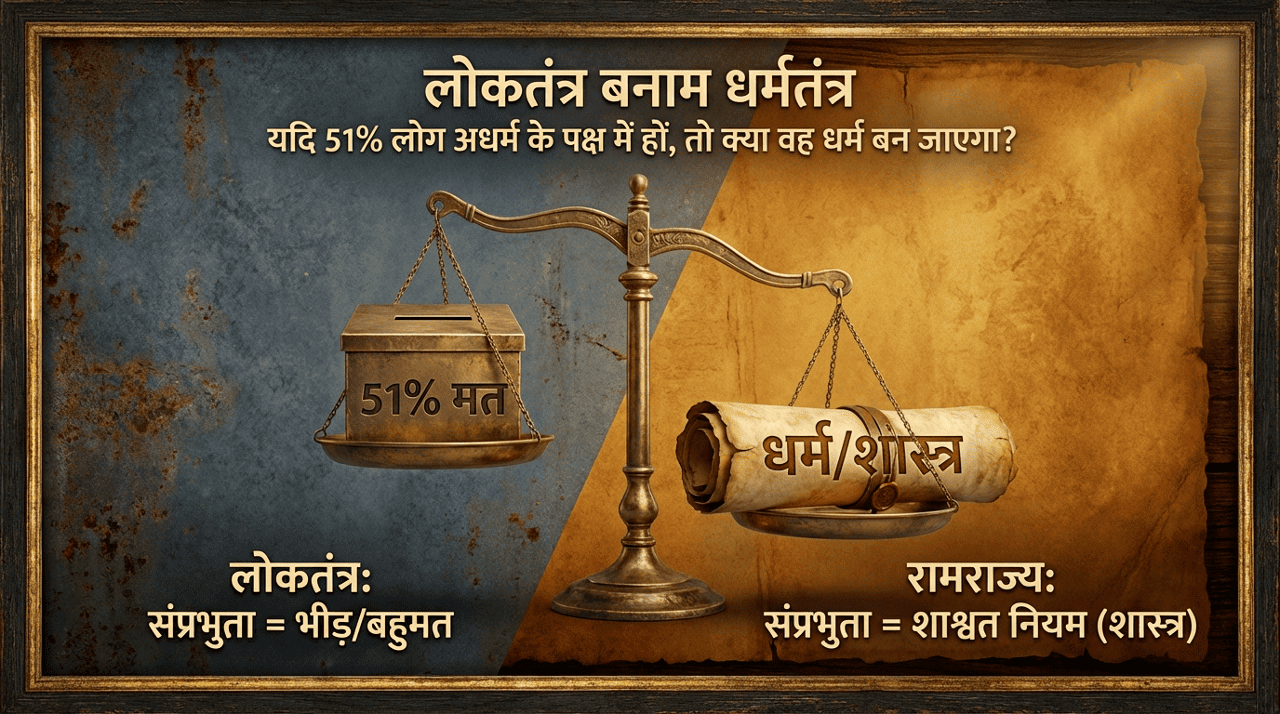
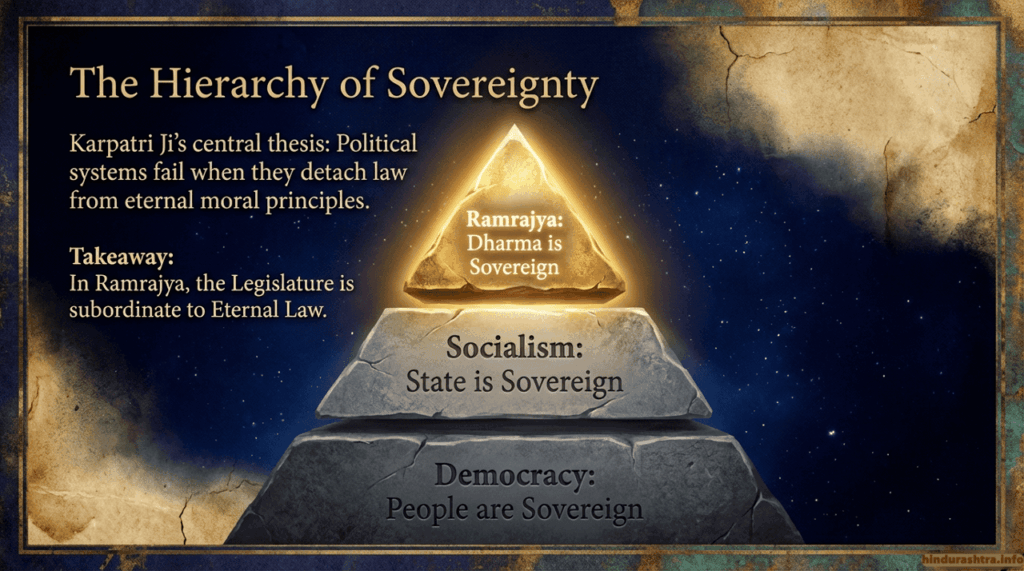
Karpatri Ji argued that absolute popular sovereignty—the idea that the people are the final authority—is inherently flawed. He maintained that “Dharma is supreme—even above the people.” He warned that if laws are determined solely by majority opinion, morality becomes negotiable. Without a moral anchor (Shastra), majority rule risks devolving into “mob rule,” where the rights of truth are sacrificed to numerical arithmetic.
Critique of Socialism and Materialism
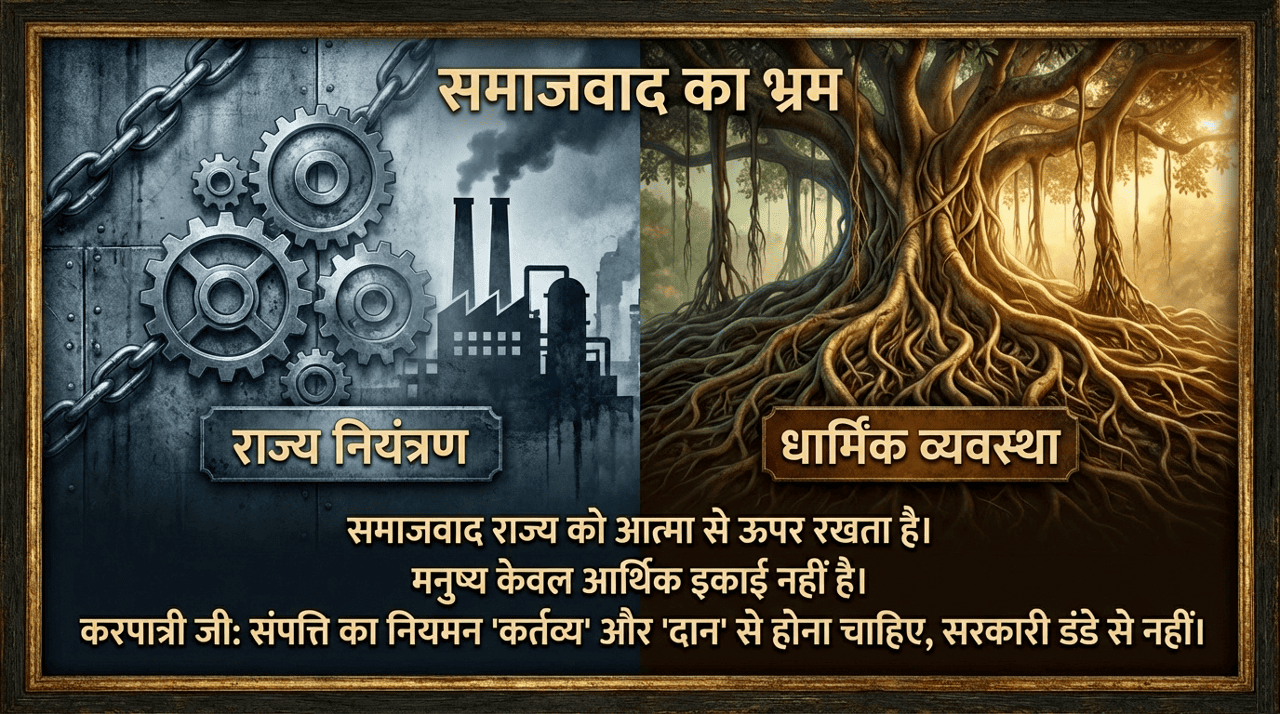
From a Dharmic perspective, Karpatri Ji viewed socialism as a materialist ideology that reduces human beings to mere “economic units.” He argued that socialism replaces an organic, duty-based order (the Varnashrama system) with a “state-engineered economic machine.” While socialism relies on coercive state power for redistribution, Karpatri Ji advocated for social harmony through voluntary moral obligation ( Dana ) . In his view, a healthy society is an organic structure where duties precede rights, rather than a collection of individuals locked in state-mediated class struggle.
Modern Secular Democracy/Socialism vs. Karpatri Ji’s Ramrajya
Feature, Modern Secular Democracy / Socialism, Karpatri Ji’s Ramrajya Model
Sovereign Authority, The People / The State, Dharma (Eternal Law)
Law-making Source, Legislative Majority / State Ideology, Veda–Smriti–Shastra
Social Harmony, Negotiated Rights / Class Conflict, Organic Order based on Duty ( Varnashrama )
Wealth Distribution, Coercive State Redistribution, Voluntary Moral Obligation ( Dana )
5. A Theoretical Framework for Modern Institution
Accountability
Translating the historical “Trustee” model into a modern professional context provides a robust mechanism for curbing “personality cults” and ensuring institutional integrity.
The “Trustee” vs. “Owner” Mindset
When a leader views their position as a “sacred duty” or a trust, decision-making shifts from personal gain to institutional preservation. An “owner” mindset leads to resource exploitation and autocratic control; a “trustee” mindset ensures that resources are managed for the long-term benefit of the entity. This transition requires moving from a rights-based culture to a duty-based culture, where accountability is self-regulating.
Policy Framework for Ethical Leadership
- Objective Accountability (Dharma-Centricity)
- Historical Precedent: The king being subordinate to Shastra ( Shanti Parva mandate).
- Modern Application: Establishing a core organizational charter of values that is constitutionally protected from executive override or majority vote.
- Institutionalized Oversight (The Shastric Analogue)
- Historical Precedent: The “Trustee” model creating a secondary layer of divine oversight.
- Modern Application: Implementing binding arbitration by an independent ethics council (analogous to Shastric councils) with the power to veto executive decisions that violate the core charter.
- Leadership as Stewardship (The Diwan Principle)
- Historical Precedent: The Maharana as the Diwan of Maharajadhiraj
- Modern Application: Rebranding executive roles from “owners” to “stewards” and implementing “Stewardship Audits” that measure adherence to the organization’s mission rather than just financial KPIs.
- Organic Social Responsibility
- Historical Precedent: Karpatri Ji’s emphasis on voluntary Dana and organic social structures.
- Modern Application: Fostering internal departments as self-governing units bound by professional ethics, replacing top-down coercion with a culture of shared duty.
6. Conclusion: The Eternal Relevance of the Servant-Leader
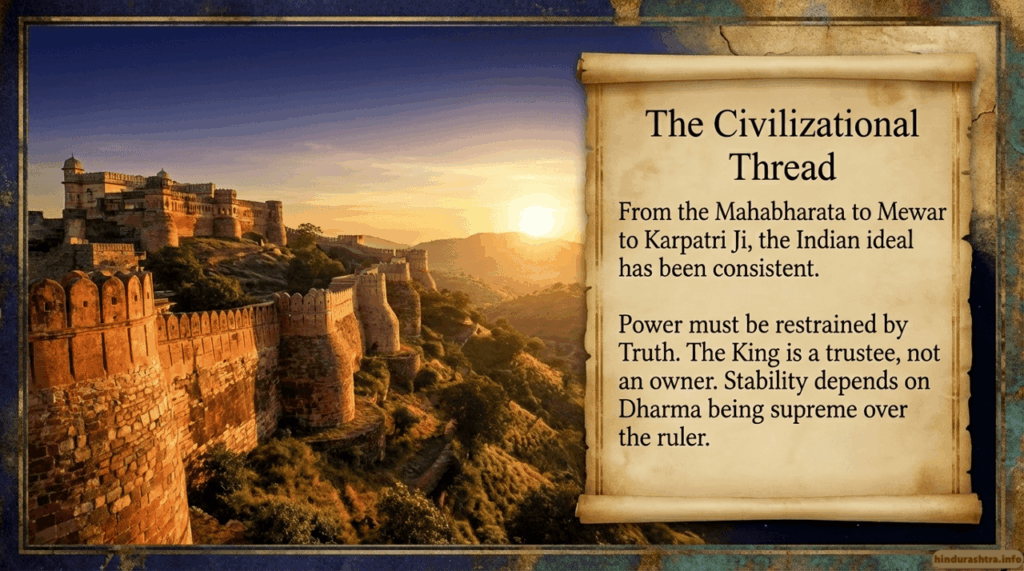
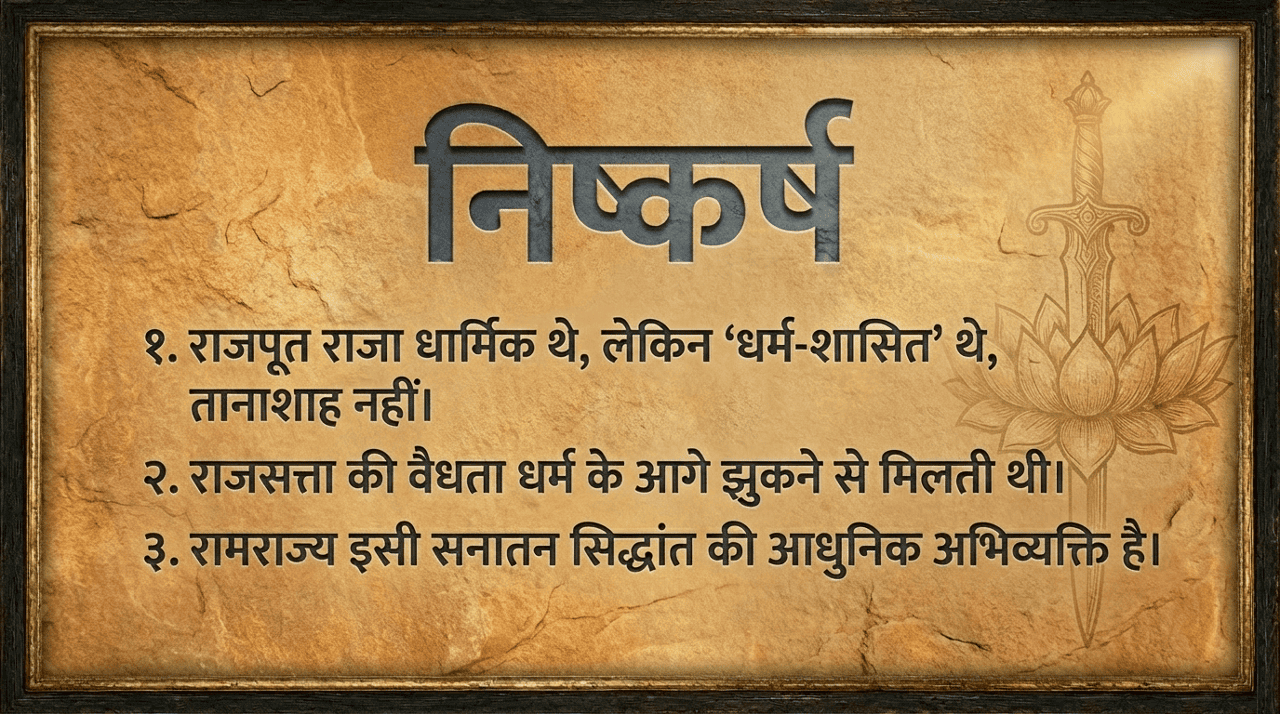
The historical and philosophical analysis of Rajadharma reveals that power is most stable when it is treated as a sacred trust. The most resilient historical states, such as Mewar and Odisha, were those where the leader was institutionally subordinated to a higher principle. This subordination does not weaken the leader; rather, it grants them a legitimacy that survives individual failures and leadership changes.
Final Synthesis
By viewing the ruler as a representative of a higher ethical order, the Dharmic model prevents absolute tyranny and ensures that the state serves a purpose beyond the survival of the administrator. This “Trusteeship” model remains the most potent alternative to modern systems that lack a moral anchor, offering a path to build institutions that are both ethically grounded and civilizationaly resilient. Closing Mandate Modern administrators must transition from the role of power-brokers to that of sacred trustees. True authority is not found in the exercise of personal will, but in the disciplined execution of duty toward a higher moral purpose. By adopting the “servant-leader” archetype, we can ensure that our institutions serve as guardians of Dharma for generations to come.